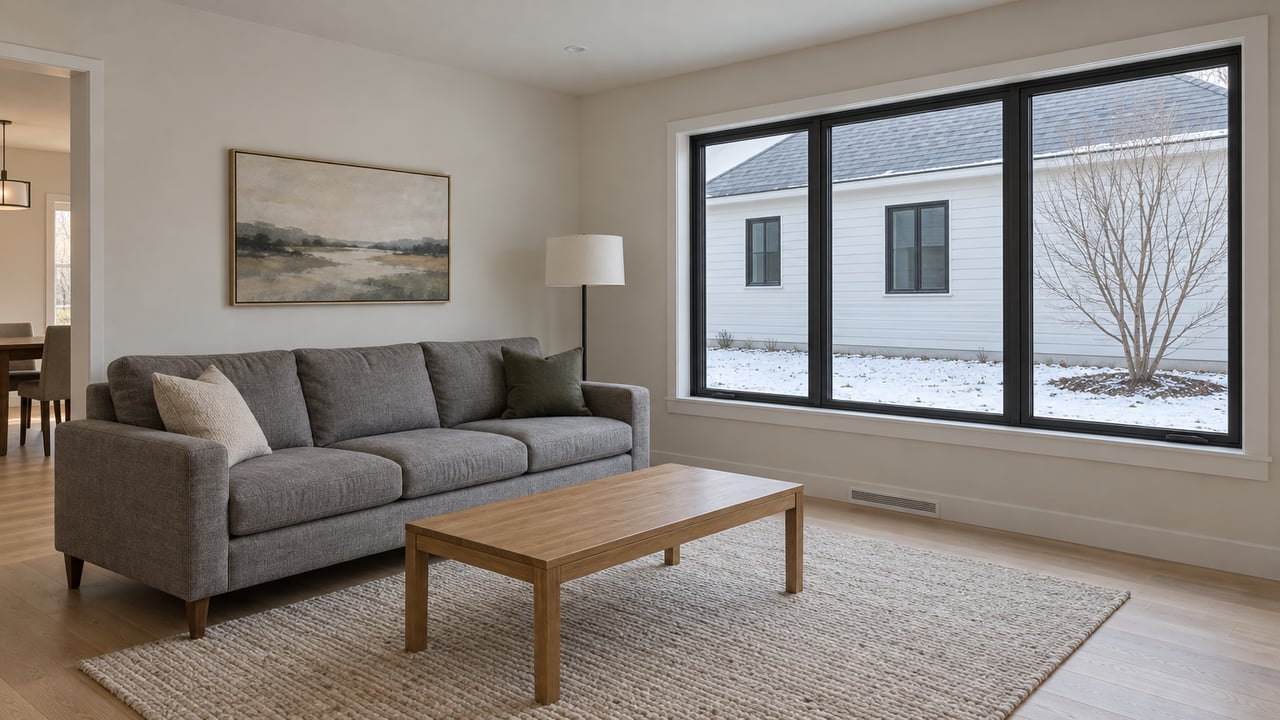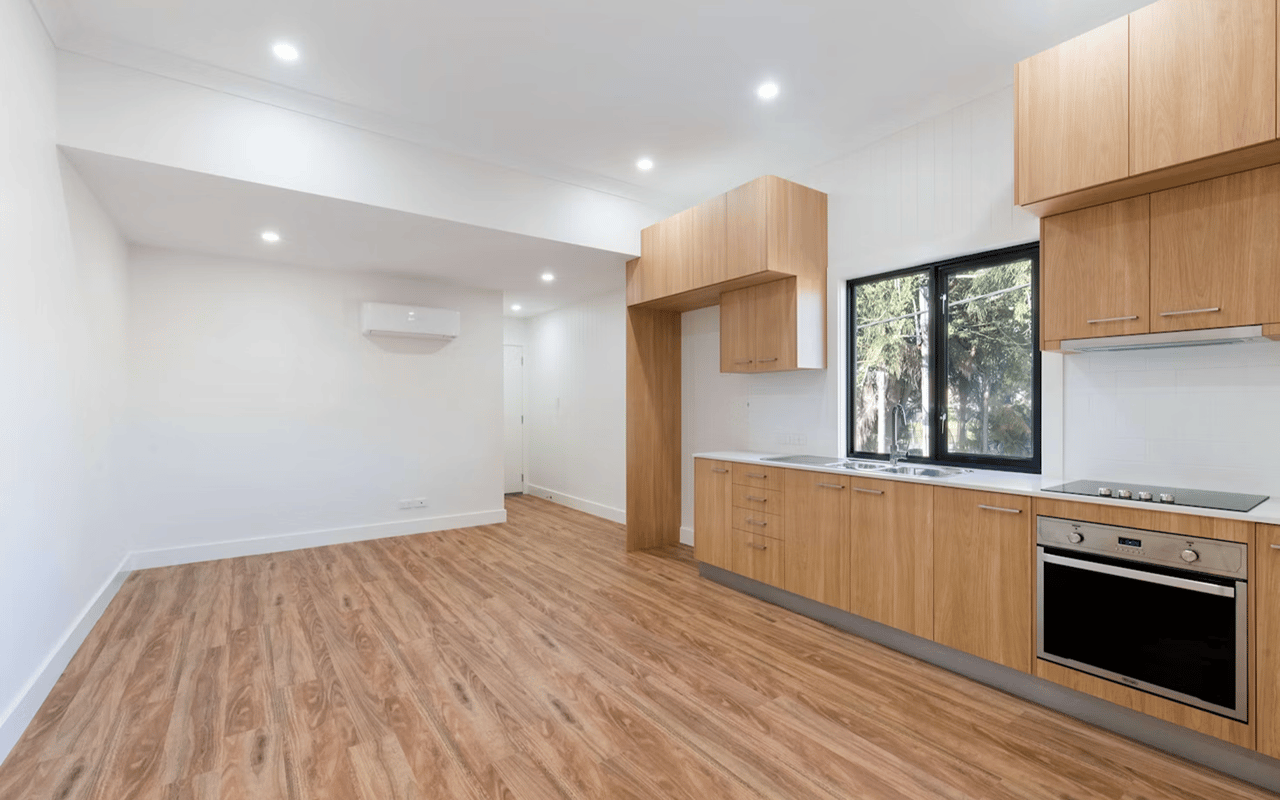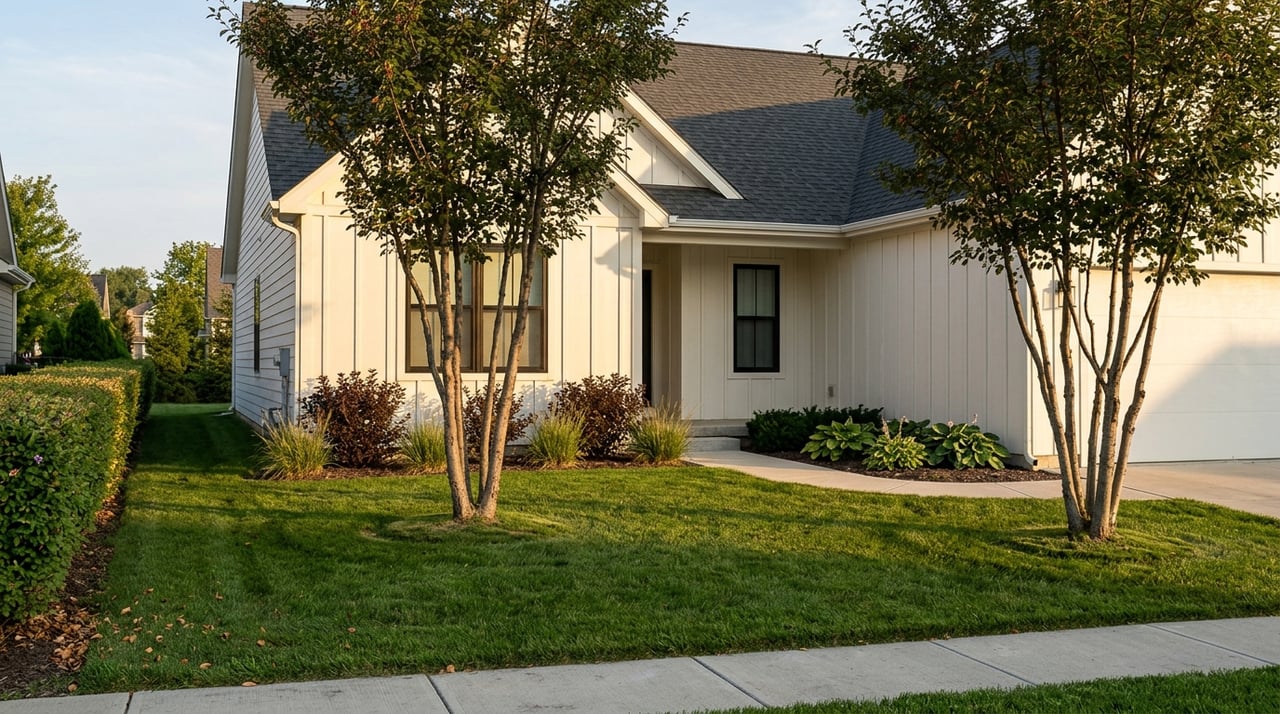
Pull up two West Fargo listings priced within a few thousand dollars of each other. One sits in the Wilds 20th Addition, framed and drywalled a few months ago, backed by a builder's marketing page promising a design studio credit. The other is a rambler in the Westwood Addition, built in 1959, no incentives mentioned anywhere. Same price. Not close to the same transaction.
The difference is worth considering before you write an offer in West Fargo, because the list price alone doesn't tell you what you'll pay to own a home over the next five years.
The Median Price Is Moving One Way. Value Per Square Foot Is Moving the Other.
Start with what the city-wide numbers actually say, because they contradict each other in a useful way. Over the three months ending in May 2026, homes in West Fargo sold for a median price of $353,000, up 2.3% from the same period a year earlier. Days on market held steady at 28. Sales volume ticked up too, with 164 homes sold in May compared to 148 the year before. By that measure, West Fargo looks like a market getting more expensive at a normal, unremarkable pace.
But the median price per square foot over that same window actually fell, down 2.9% year over year to $170. A rising median price and a falling price per square foot in the same market, over the same three months, means the typical home changing hands got bigger relative to its price, not more expensive per foot of living space. Some of that is simply larger new construction pulling the median upward while established, smaller-footprint resale homes hold per-square-foot value steady or ease slightly. Either way, the headline number and the number that actually describes what your money buys are telling two different stories at once. Neither one, on its own, tells you what a specific house will cost you.
Why Builders Offer Incentives
In neighborhoods like the Wilds and Eagle Run, builders are not shy about running promotions. One recent West Fargo listing in the Wilds advertised a holiday-season price cut of $25,000 for a limited window. A separate listing, for a Jordahl Custom Homes build in the Wilds 20th Addition, offered a $5,000 design studio credit plus included sod, deck, and sprinklers for buyers who reserved a homesite that November, with the option to lock in the prior year's base pricing on a spring build.
Not all of those promotions show up as a lower list price.
A lower sale price becomes part of the sales record and can affect the appraisal comparables that other homes in that community get measured against, including the neighbors who already closed at full price. A rate buydown or a design credit can affect a buyer's costs without changing that recorded sale price.
That's not a quirk unique to West Fargo. Builders nationally have been leaning on this for more than a year, with a large majority reporting they're using some form of incentive to move inventory rather than cutting sticker prices outright. Locally, incentives mean buyers may need to consider more than list prices when comparing homes in the same addition. If you're cross-shopping new construction in the Wilds and Eagle Run, compare the list price along with the design credit, buydown terms, and items included at closing.
West Fargo's New-Construction Property Tax Exemption
Here's a piece of the math that has nothing to do with the builder and everything to do with the city. Build RRV says West Fargo offers a property tax exemption on newly built single-family homes, townhomes, and condos: up to roughly $4,000 off the tax bill, delivered as an exemption on up to $150,000 of the home's valuation for two taxable years following the year it was sold. It goes to the first owner after the builder who actually lives in the home, not to investors or second buyers a few years down the line.
That's real money, and it only applies to genuinely new construction. A resale home in Eagle Run that's eight years old doesn't qualify no matter how similar it looks to a brand-new one three streets over. Buyers comparing a new build against an established resale need to run the tax line separately, because the two houses aren't playing by the same rules even if the county mill rate is identical.
Comparing Newer and Established West Fargo Homes
| New construction (Wilds, Eagle Run, DMF Addition) | Established resale (Westwood-era neighborhoods) | |
|---|---|---|
| List price behavior | Builder incentives may be available; terms vary by listing | Pricing and negotiation vary by listing |
| New-construction tax exemption | Eligible, up to ~$4,000 over two years | Not eligible |
| Infrastructure assessment status | New improvement districts actively forming as subdivisions build out | Assumed paid off, but can reopen for aging-infrastructure reconstruction |
| Builder incentive exposure | Rate buydowns, design credits, included extras vary listing to listing | Not applicable |
Infrastructure Assessments in Established Neighborhoods
It's tempting to assume an established neighborhood like Westwood, platted in 1959, is done paying for its own streets and pipes. The city's current capital projects list says otherwise. Westwood's infrastructure has been in the ground for decades, the sanitary sewer is vitrified clay pipe, the watermain is asbestos cement pipe, and the city has flagged the storm sewer as undersized for current standards. West Fargo has an active improvement district underway to reconstruct the system. That project gets paid for the same way growth-area infrastructure does: through a special assessment against the benefiting properties.
The same pattern shows up in the newer parts of town from the other direction. The city's current project list includes an improvement district building out streets and utilities for the DMF Addition on 21.09 acres north of 23rd Avenue East, and another replatting a stalled multi-family site in the Grant 2nd Addition into a larger inventory of buildable lots, with the full cost of those improvements assessed to the properties inside each district. The Wilds itself has its own ongoing infrastructure work, including a sanitary lift station tied to its ninth addition.
The lesson isn't that new construction is riskier or that old neighborhoods are safer. It's that assessment exposure isn't a function of a neighborhood's age. It's a function of whether that specific block currently sits inside an active improvement district, and that can be true in a subdivision platted last year or one platted during the Eisenhower administration.
What to Compare Before You Write an Offer
- Ask the builder for a written breakdown of every incentive, separated into rate buydown value, closing cost credit, and design center allowance, so you can compare it against a straight price on a competing lot.
- Confirm new-construction property tax exemption eligibility with the city before you assume it applies, and budget for the partial first year, since the rebate doesn't start until the next full taxable year.
- Pull the current and pending special assessment balance on any specific parcel you're serious about, new or old, rather than assuming a subdivision's age tells you the answer.
- Translate every builder incentive into two numbers before comparing offers: what it does to your actual monthly payment, and how much cash you bring to the closing table.
A Few Questions Worth Asking Directly
Does the property tax exemption apply automatically when I close on a new home? No. It applies to the first owner after the builder who occupies the home, and it starts with the next full taxable year rather than the partial year you close in. Confirm the timing with the city before you build it into your budget.
If a builder sells a home for $25,000 less during a promotion, does that change the comps for the whole subdivision? That's exactly why builders tend to reach for incentives instead. A lower sale price becomes part of the public sales record and can affect comparable sales used in appraisals in that subdivision. A rate buydown or a design credit generally doesn't change the recorded sale price in the same way.
How do I find out if a specific address has a special assessment attached to it? The city publishes current and pending improvement district information, and a title company or the city's finance department can confirm the balance tied to a specific parcel before you go under contract, regardless of whether the home was built last year or sixty years ago.
A West Fargo listing price is one part of what a home costs to own. If you want someone to run that comparison on a specific address, whether it's a new build in the Wilds or a resale near Westwood, Up North Realty Group can pull the incentive terms, the exemption timeline, and the assessment history side by side before you write an offer.
This article is general information, not legal, tax or financial advice. Consult a qualified professional about your situation.