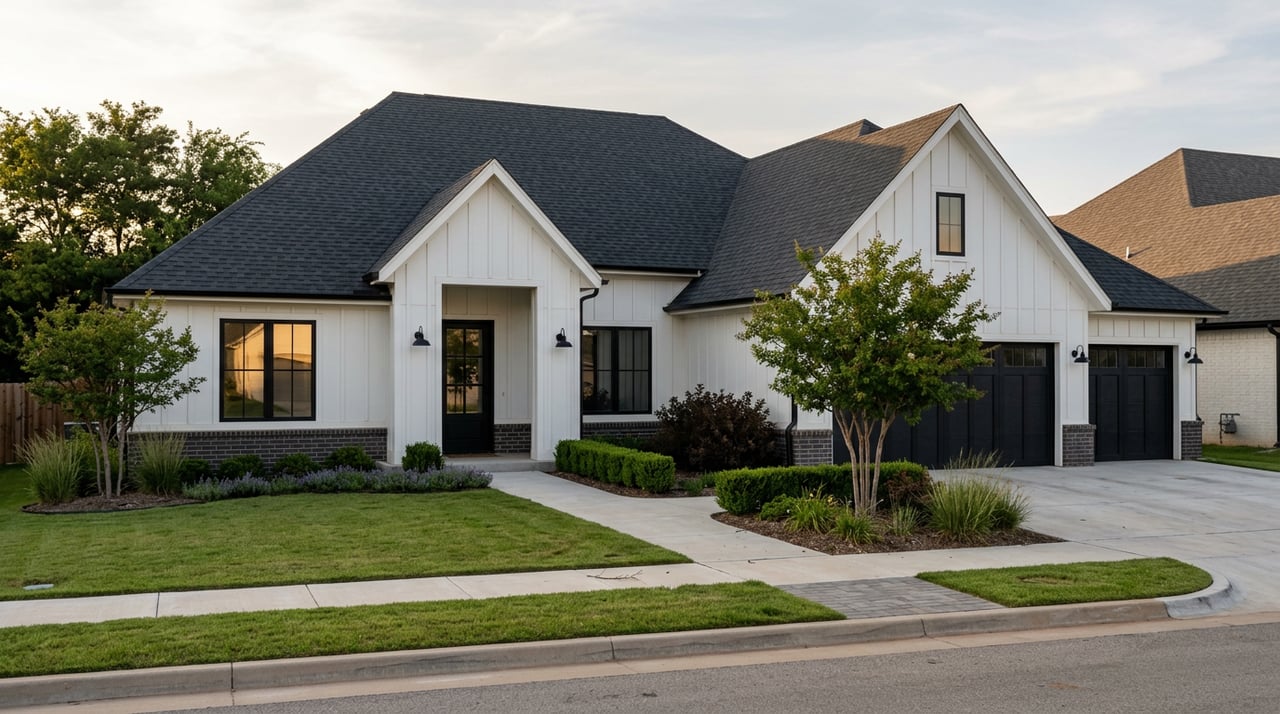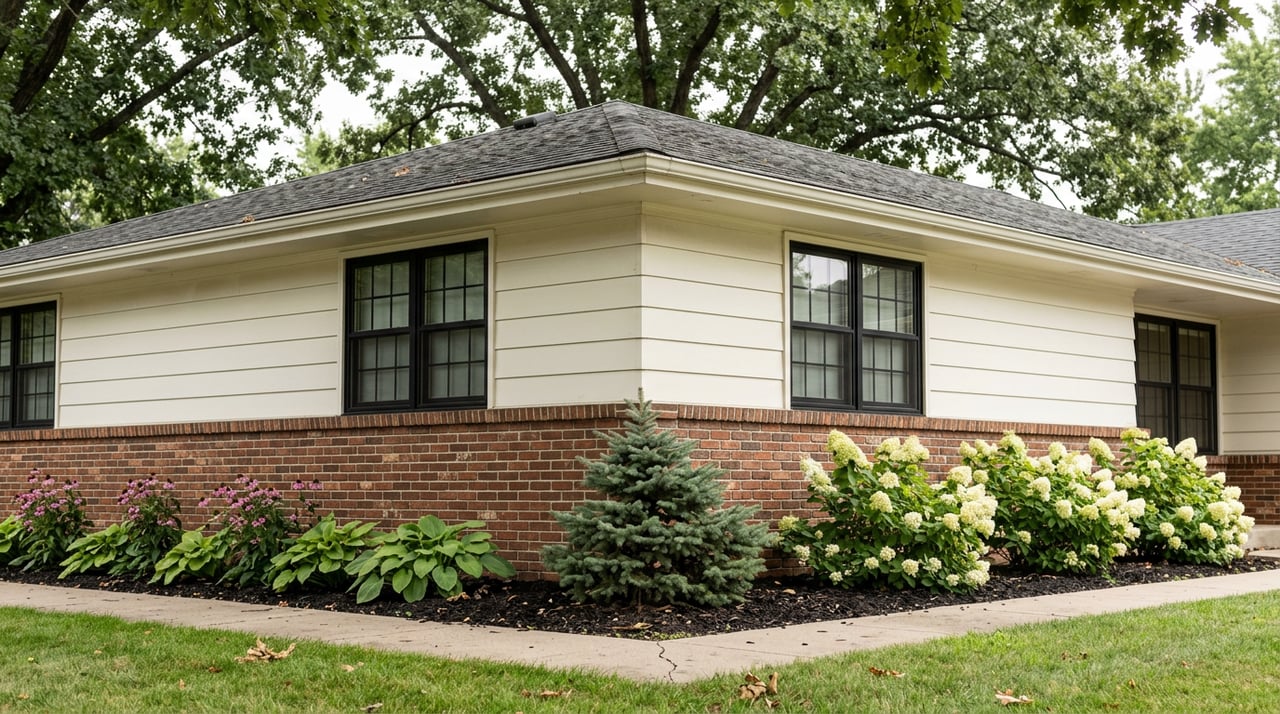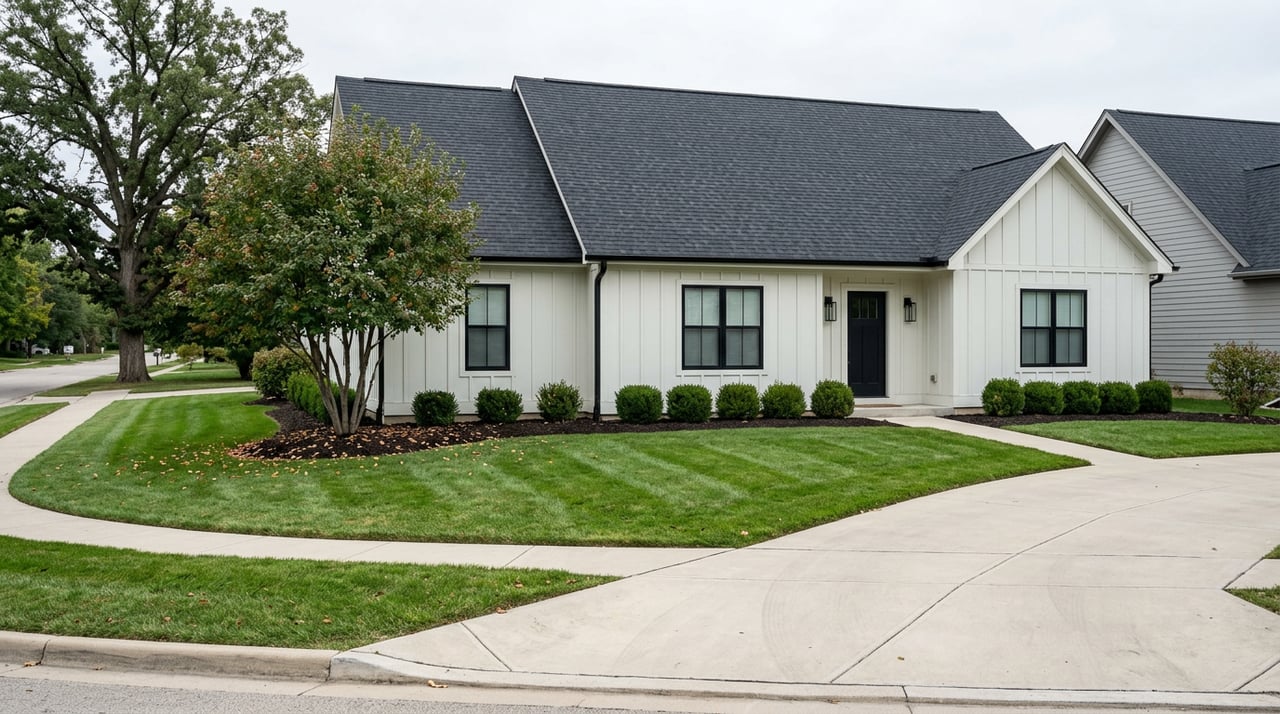
West Fargo homes were going to pending status in about twenty days as of this summer. That is not a typo and it is not a slow season. It is the pace of one of the tightest submarkets in the Fargo-Moorhead metro, and it means most buyers are writing offers, scheduling inspections, and closing before they have ever laid eyes on the actual document that controls what they can do with their new house.
That document is not the one-page HOA summary sheet a listing agent hands over at showing. It is the recorded Declaration of Covenants, Conditions, and Restrictions filed with the county, and in West Fargo's newer subdivisions, it is longer, older, and more layered than the marketing name on the sign out front would suggest.
One Neighborhood Name, Several Rulebooks
Drive through Eagle Run, Brooks Harbor, Eaglewood, or Oak Ridge and the listing will say you are buying into "Eagle Run" or "Brooks Harbor." What that name actually represents is a series of additions platted over years, sometimes over a decade, each one a separate legal filing that can carry its own amendments to the original covenant.
The city's own list of active special assessment improvement districts shows this in plain numbers. Recent notices include Eaglewood 7th Addition, Brooks Harbor 9th Addition, Oak Ridge 18th Addition, Eagle Run 9th Addition, and Eagle Ridge Plaza 6th Addition, alongside a storm sewer project for The Wilds South. Those aren't typos either. A subdivision on its ninth or eighteenth addition has been developed in phases long enough that the covenant governing a home built in phase one may read differently than the covenant governing a home three streets over in phase nine, even though both carry the same neighborhood name on the listing sheet.
This pattern is not unique to West Fargo. Just south of the city, the Osgood First Addition Homeowners Association explicitly notes that later re-plats to Osgood 2nd, Osgood 3rd, Osgood Villas, and several other additions all fall back under the original 2015-era declaration rather than getting a fresh set of rules. That structure works fine until a buyer assumes the covenant they read for one address applies uniformly to the whole development. It often doesn't.
The fix is simple but easy to skip in a twenty-day market: ask for the recorded declaration for the specific addition the home sits in, not a general packet for the neighborhood brand name.
What North Dakota Actually Requires, and What It Leaves Up to the Developer
North Dakota takes what one legal reference site accurately calls a light-touch, local-control approach to community associations. There is no dedicated state HOA act. Associations operate as nonprofit corporations under the state's general nonprofit corporation law, and the real governing power sits in whatever covenant the original developer recorded.
That matters for two practical reasons. First, the state does give HOAs real teeth: an association can fine a homeowner for a covenant violation, place a lien on the property for unpaid dues, and ultimately foreclose if that lien goes unresolved. Second, because there is no statewide template dictating what a covenant must say, every West Fargo subdivision's rules are only as strong, as fair, or as quirky as whatever the original developer's attorney wrote a decade or two ago.
A Fargo-based builder made the case for why these rules exist at all in a piece the Fargo Forum ran a few years back:
"You don't want to buy a home and then find the guy next door is putting down a bunch of old cars and not taking care of his or her place."
That is the pitch every developer makes to early buyers. The rules protect the look of the street and, by extension, the resale value of every home on it. What the pitch leaves out is who is actually enforcing those rules in the early years, and what happens once the developer walks away.
Who Is Actually Running the Board
In a new subdivision, the developer typically controls the HOA board until a set share of lots sell, often somewhere between 60 and 85 percent. Buyers who close early are, in effect, agreeing to whatever budget, dues structure, and enforcement priorities the developer sets, with limited ability to change course until enough neighbors move in to take a board seat.
West Fargo's own planning director made a related point in that same Forum reporting: many of the restrictions written into a subdivision's covenant duplicate rules the city already enforces through its own ordinances. That overlap is not a problem on its own, but it does mean a homeowner facing an HOA fine for, say, an unapproved fence is dealing with a civil, contractual dispute between neighbors and a private board, not a city code violation the municipality will step in and referee.
The Fargo-Moorhead Area Association of Realtors has generally recommended that agents supply buyers a list of covenants for the subdivision they're touring specifically so there are, in the association president's words, hopefully no surprises. That practice only works if the buyer actually reads what gets handed over, and reads it for the right addition.
When the Architectural Review Committee Meets the Insurance Clock
The friction point that catches people hardest isn't cosmetic, it's timing. Most of West Fargo's housing stock went up in the last twenty years, and the newer subdivisions built along Eagle Run, Brooks Harbor, and the Sheyenne Street corridor are almost entirely HOA-controlled. That controls more than paint colors. After a hail or wind event, before any roofer can start work, the homeowner typically needs architectural review approval on shingle color matched to the neighborhood's approved palette, sometimes from a pre-approved contractor list, plus permit sign-off.
North Dakota gives homeowners roughly a year to file an insurance claim after a storm. That window does not pause for HOA paperwork. A homeowner who waits on architectural review approval before filing the insurance claim risks running the two processes in the wrong order and losing ground on the claim deadline. The right sequence, according to roofing contractors who work this market regularly, is to file the insurance claim first and coordinate HOA approval alongside it, not after it.
This is exactly the kind of detail that never makes it onto a listing sheet, because it only becomes relevant after closing, usually after the first serious storm.
The Lien Nobody Mentions Until Closing
The mirror image of the buyer's problem is the seller's. If HOA dues go unpaid, North Dakota law allows the association to file a lien against the property. That lien has to be satisfied before a sale can close cleanly, and it can sit on record long enough to complicate a title search a seller didn't see coming.
A veteran HOA board member elsewhere in the metro described the stakes bluntly after his own association fought and won a dispute over a builder trying to put up an undersized home in a $300,000-and-up neighborhood: the entire point of the covenant, in his words, is to protect resale value for everyone who lives there. That protection cuts both ways. It raises the bar for what gets built, and it raises the bar for what a seller owes before they can hand over keys.
Before You Write an Offer
- Ask for the recorded covenant for the exact addition, not a general packet for the neighborhood name.
- Ask whether the developer still controls the HOA board or whether homeowners have taken it over.
- Ask how long architectural review approval typically takes for exterior changes, especially roofing.
- If you're selling, request a dues-paid letter or lien search before you list, not during escrow.
- Compare the HOA-governed newer subdivisions against West Fargo's older, non-HOA core closer to Main Street, where you trade some of the shared upkeep for more flexibility on what you can change without a committee's sign-off.
None of this means the newer subdivisions are a bad buy. Eagle Run, Brooks Harbor, and their neighbors sell fast for a reason: consistent curb appeal, shared amenities, and the exact kind of predictable street-level look that covenant enforces. It just means the paperwork behind that predictability is worth ten minutes of reading before you're twenty days into a purchase agreement.
A Few Direct Questions
Does every West Fargo subdivision have an HOA? No. The city's older core near Main Street largely predates the HOA-governed model. Most subdivisions built in the last two decades, including the growth corridor along Sheyenne Street, do carry mandatory HOA membership.
Can I get out of HOA membership after I buy? Generally no. North Dakota HOAs formed through a recorded covenant are mandatory. Buying the property makes you a member automatically, and there is no straightforward way to opt out while keeping the home.
Who enforces HOA rules if the board and a homeowner disagree? It stays civil, not municipal. Cities and counties in this region have made clear they don't enforce private covenants directly. Disputes get resolved through the association's own process or, if that fails, through the courts.
If you're weighing a purchase in one of West Fargo's newer additions, or getting ready to list a home that's carried HOA dues for years, it helps to have someone pull the actual covenant and walk the timeline with you before you're under contract. That's the kind of groundwork Brett Dalzell and the Up North Realty Group team do for every buyer and seller in this market, so the paperwork surprises happen before the offer, not after the closing.