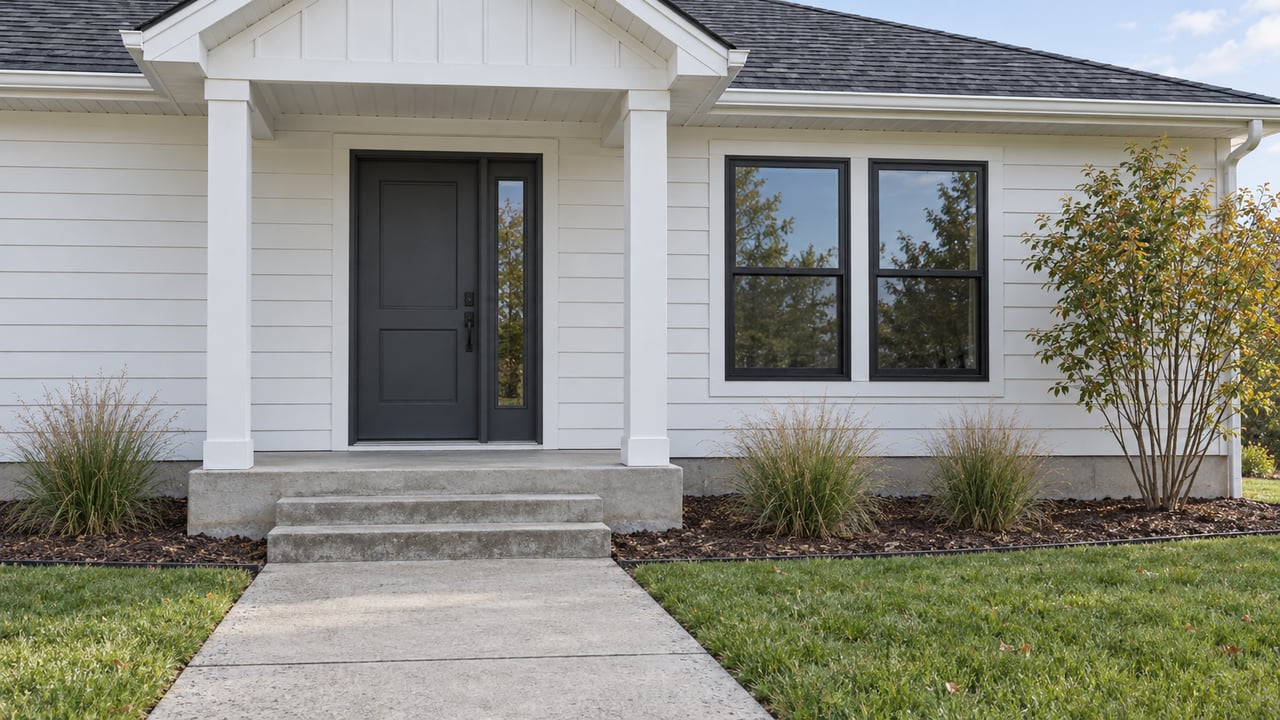
Picture a Saturday showing. Two houses, both built within the last three years, both inside Horace city limits, both listed as "new construction" with the same builder finishes and the same drive time to West Fargo. A buyer touring both back to back would have no reason to ask what happens when they flush a toilet in either one. They'd assume the answer is the same. In Horace right now, it often isn't.
That single assumption, that "new" and "in Horace" means "on the same city utilities as everywhere else," is the one worth checking before you write an offer. Horace is growing addition by addition, not utility system by utility system, and the wastewater infrastructure underneath a specific address depends entirely on which addition it sits in.
Three Systems, One City Limit
Dreamfields Addition runs on individual septic tanks. Each home has its own conventional onsite system, the kind a rural buyer would expect on an acreage, not inside a platted city subdivision.
River's Edge (First) Addition is different again. Homes there connect to a private centralized collection system: wastewater is individually pumped into a pressurized force main that carries it to a private mechanical treatment plant, which discharges the treated water to the Sheyenne River. The City of Horace has since taken over operation and maintenance of that plant, but the system itself is still the original private build, not a standard municipal sewer main tied into a citywide network.
Then there's the third category, and it's the largest right now: additions where the city is actively laying municipal water and sewer as part of ongoing improvement districts. Southdale Farms 6th Addition, Deer Creek Estates 2nd and 3rd Additions, Willow Grove First Addition, and the Luther Avenue and Sparks Addition corridor are all mid-construction on full public infrastructure, funded through special assessment districts the city opened between 2023 and 2025.
Three systems, one city limit, and no way to tell which one serves a given lot just by looking at the house.
| System type | Where it shows up | What a buyer should check |
|---|---|---|
| Individual septic | Dreamfields Addition | Septic inspection, tank age, drain field condition |
| Private centralized treatment | River's Edge (First) Addition | City's current maintenance terms, plant capacity |
| Municipal water and sewer, under construction | Southdale Farms 6th, Deer Creek Estates 2nd/3rd, Willow Grove First, Luther Ave/Sparks | Special assessment balance, hookup completion date |
How Special Assessments Affect the Purchase Price
Municipal sewer has a different cost structure. When Horace extends water and sewer into a new addition, buyers should clarify what costs may apply before purchase.
The city currently has several of these districts open and moving through the confirmation process, covering additions like Southdale Farms 6th, the You Betcha Drive and Visto 3rd corridor, 65th Avenue, and Deer Creek Estates 2nd and 3rd. The Special Assessment Commission confirmed the lists for those districts earlier this summer, and the City Council held a special meeting on September 3 at the Horace Meeting House to act on them. New districts open on a rolling basis, so anyone can request current pending or certified assessment information directly from the city's finance office before writing an offer, helping clarify potential costs.
A septic-served home in Dreamfields has a different cost structure from a home connected to municipal sewer. That's not an argument for one system over the other, but a reminder that utility setup is part of the purchase decision.
Why the Patchwork Exists
None of this is a builder cutting corners. It's a small city trying to keep pace with numbers that would strain any local government. The 2020 census counted 3,085 residents in Horace. City estimates put the 2025 population near 8,500, more than double in five years, and that growth is why utilities are being built district by district rather than all at once across a finished city grid.
Cass Rural Water District has been staging its own expansion alongside the city's, including a new 16-inch water trunk main installed along 64th Avenue in 2023 as part of a broader connection to Fargo's system. That kind of sequencing matters for buyers because it means the timeline for full city service in a given corridor is often tied to a regional project, not just a local one, and it can shift.
The Rate Structure Just Changed Too
If you do end up in a home on municipal sewer, the math around what you'll actually pay each month changed at the start of this year. The city issued a notice in late December confirming that water, sewer, and trash rates would increase effective January 1, 2026, and those new rates have been in place since the start of the year. Water and trash increases were tied to rising wholesale costs from the city's supplier and higher vendor fees. Sewer billing moved to a flat-rate structure based on yearly averages, a deliberate shift meant to make monthly bills more predictable rather than swinging with seasonal usage.
That predictability is worth something, but it's a cost variable that only applies to homes on the municipal system. A Dreamfields buyer isn't paying a city sewer bill at all, flat rate or otherwise. They're budgeting for septic pumping and eventual system repair instead. Comparing two Horace homes on price per square foot alone skips over which of these two cost structures you're actually signing up for.
Four Questions to Ask Before You Write an Offer
- Which wastewater system serves this specific address: individual septic, the private River's Edge system, or municipal sewer?
- If it's municipal, is there a pending or certified special assessment balance attached to the parcel, and what's the remaining payoff term?
- If it's septic, when was the tank last pumped and inspected, and what's the condition of the drain field?
- If it's the River's Edge system, what are the current terms of the city's maintenance arrangement, and are there any planned changes to how that plant is operated?
These questions can help clarify what serves a home. All four are answerable before closing if you ask early.
A Few Common Questions
Does an addition's utility type affect financing? Lenders generally evaluate septic and private treatment systems differently than a straightforward municipal hookup, often requiring a system inspection as part of underwriting. Ask your lender early which requirements apply to the specific system serving the home you're considering.
Do special assessments automatically transfer to a buyer? The treatment of an assessment balance at closing is worth addressing directly in the purchase agreement.
How do I find out which system serves a specific address before I tour a home? The city's finance office can confirm current and pending special assessment status by parcel, and a listing agent should be able to tell you which wastewater system serves a given addition. If neither can answer quickly, treat that as a reason to slow down, not speed up.
Horace's growth is real and its infrastructure is catching up in real time, which means the ground under a listing can tell you as much as the finishes inside it. If you're comparing homes across Horace's newer additions and want a clear read on what's actually underneath a specific address before you write an offer, the team at Up North Realty Group can walk the assessment rolls and utility maps with you and clarify how assessments and utility systems factor into the purchase.
This article is general information, not legal, tax or financial advice. Consult a qualified professional about your situation.