Finding the right part of Moorhead can be just as important as finding the right house. If you are trying to decide between an older home near downtown, a quieter area near the golf courses, or a newer build on the south side, you are not alone. The good news is that Moorhead offers a real mix of housing styles, price points, and neighborhood settings, so you can match your search to the way you want to live. Let’s dive in.
Moorhead offers more than one lifestyle
Moorhead is not just one type of housing market. The city says it includes both mature neighborhoods and developing ones, which gives buyers a wider range of choices than many people expect.
That matters if you are trying to balance budget, home style, maintenance, and location. It also helps explain why two homes in the same city can feel very different from each other.
For a citywide baseline, Moorhead’s 2025 annual development report lists a median sales price of $269,950. That number is useful for context, but neighborhood-level pricing can vary quite a bit depending on age, setting, and home type.
Another point many buyers ask about is flooding. According to the city, nearly all property in Moorhead is flood protected because of mitigation efforts since 2009.
Historic core fits character-home buyers
If you are drawn to older homes, a more walkable setting, and easy access to civic spaces and small businesses, the historic core and downtown Moorhead may be worth a closer look. The city describes downtown as a compact, walkable neighborhood and the traditional heart of the community.
This part of Moorhead tends to offer more personality than uniformity. Instead of rows of similar subdivision homes, you are more likely to see properties with distinct architecture, mature streets, and details that reflect different eras of construction.
Current examples support that image. A downtown listing highlights a 1910 home with original woodwork, hardwood floors, and tall ceilings, while the Comstock House remains a well-known 1883 landmark in the area.
What buyers often like here
Buyers who choose the historic core are often looking for:
- Older-home character
- Walkability by Moorhead standards
- Access to downtown destinations and civic spaces
- A less cookie-cutter neighborhood feel
- Potential live-work flexibility in some mixed-use areas
This area can also involve tradeoffs. You may get a more unique home and stronger sense of place, but you may give up some yard size, newer finishes, or the predictability that comes with newer subdivisions.
Price range in the historic core
Pricing in and around downtown is broad. Current examples and nearby recent sales suggest a range from the low $200,000s into the high $300,000s, with renovated or larger homes sometimes priced higher.
That range makes the historic core more flexible than some buyers assume. It is not only for buyers chasing a showpiece historic property. It can also work for buyers who want location and character at different price levels.
Golf-course areas fit recreation-focused buyers
If you want a quieter residential feel with easy access to outdoor recreation, Moorhead’s golf-course communities offer a different kind of appeal. The areas around The Meadows and Village Green are about more than golf alone.
Both public courses connect to neighborhood life in practical ways. The Meadows includes casual dining and event space, while Village Green offers clubhouse dining, a pro shop, leagues, and lessons.
That means these areas can appeal even if you are not a serious golfer. The bigger draw may be the open setting, neighborhood-scale amenities, and lower-traffic feel many buyers associate with this type of location.
What buyers often like here
Homes around these areas can include both attached and detached options. Current listings suggest buyers may find one-level townhomes, larger yards, mature trees, fenced outdoor space, and in some cases golf-course views.
This category can fit buyers who want:
- Recreation close to home
- A suburban layout with easy access to town
- Lower-maintenance attached housing options
- Larger lots in some sections
- A quieter residential setting
Price range near the courses
The golf-course category covers a fairly wide price band. Village Green examples cluster around the high $200,000s to low $300,000s, while larger Meadows-area homes can reach into the $500,000s.
That range is helpful if you like the setting but are still deciding how much space or upkeep you want. In other words, this is not just a move-up market. It can also work for buyers looking for easier one-level living or attached-home convenience.
South and east growth areas fit newer-home buyers
If your wish list starts with modern finishes, open layouts, and less immediate maintenance, newer south and east-side developments may be the strongest match. Moorhead’s long-range planning documents show that the south and east edges of the city remain active growth areas rather than fully mature neighborhoods.
The city’s plans call for a mix of residential, commercial, and public uses, especially in the East Growth Area. The South Growth Area also remains an area where relatively little development had occurred as of the city’s most recent update, which tells you these parts of town are still evolving.
For buyers, that often means you are shopping not just for a house, but for a neighborhood that is still taking shape. Future streets, parks, businesses, and open spaces are part of the long-term picture.
What newer construction looks like
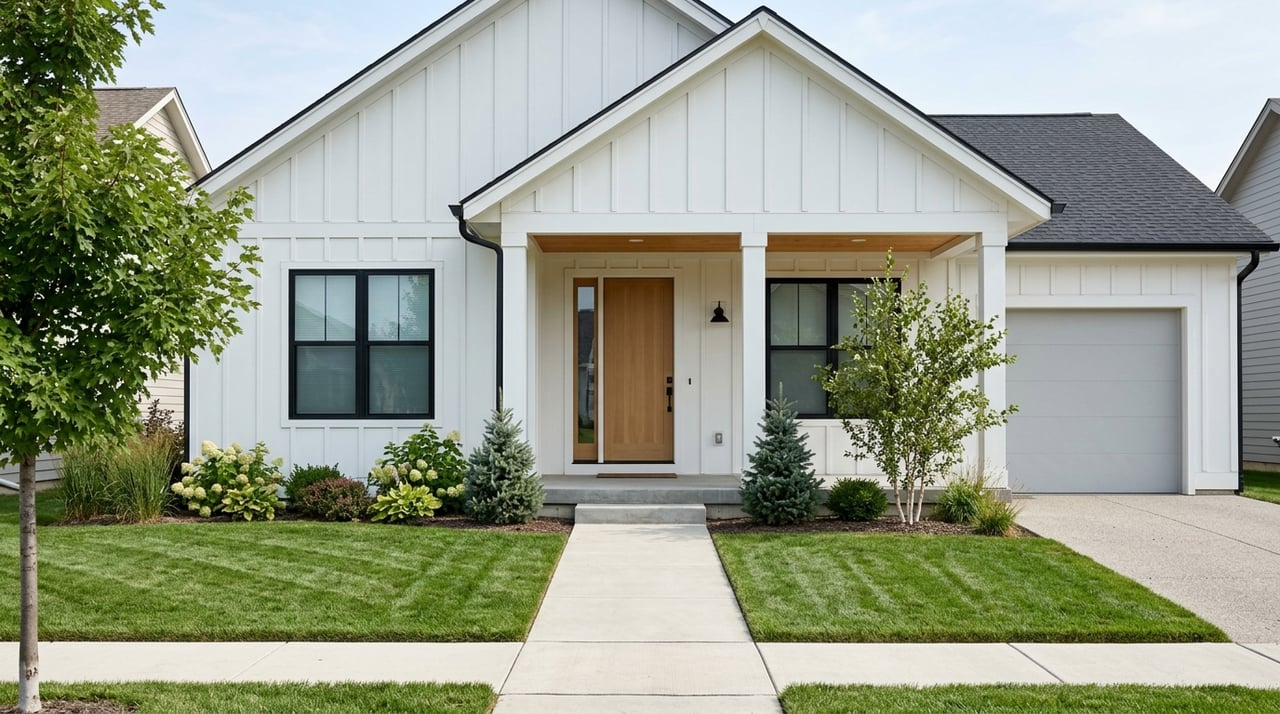
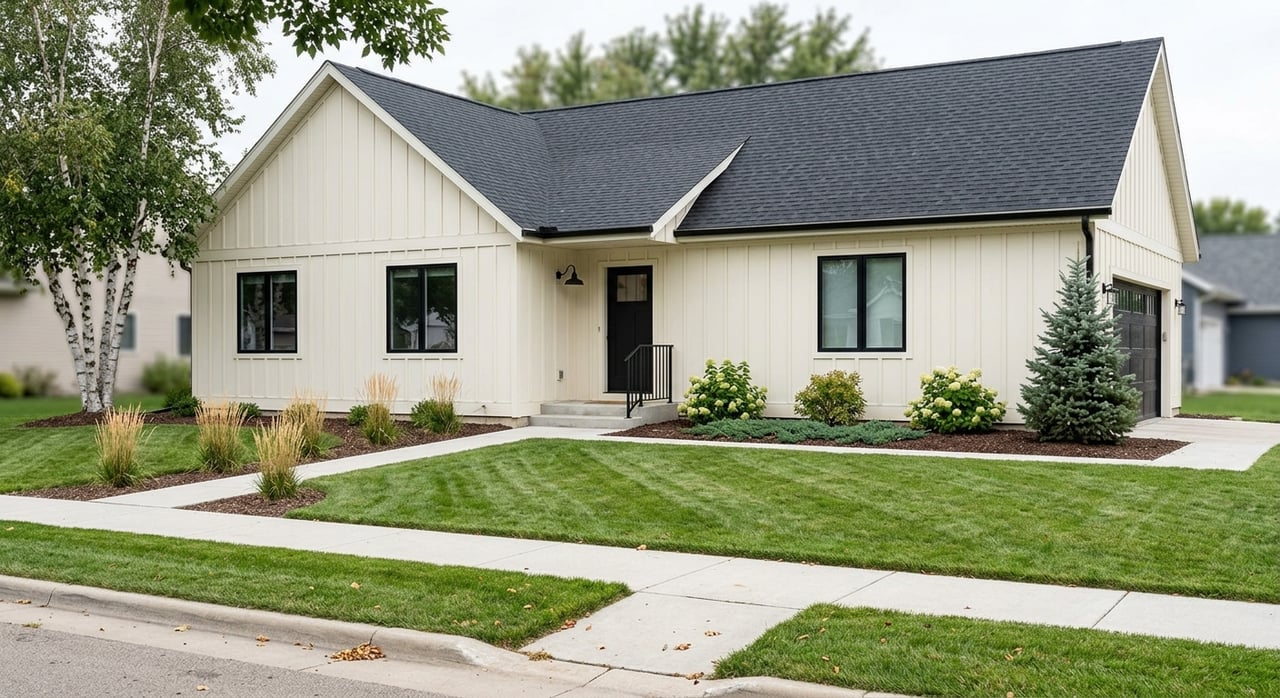
Current South Moorhead listings in Prairie Parkway show a consistent newer-build pattern. Features include open-concept layouts, no-step slab options, quartz or granite finishes, modern exteriors, and common 3-bed, 2-bath or 3-bed, 3-bath floor plans.
That kind of inventory tends to appeal to buyers who want a more standardized layout and fewer early repair projects. It can also be attractive if you prefer clean, current design over the quirks that often come with older homes.
Price range in newer developments
Recent pricing for Prairie Parkway homes runs from about $362,855 to $369,680, with a completed model home sold for $459,569. That places newer south-side inventory clearly above Moorhead’s 2025 median sales price of $269,950.
So why do many buyers still compare these homes with older in-town options? In part, it comes down to the value they place on new construction, modern finishes, and lower short-term maintenance.
New-build incentives can shape your decision
Moorhead also offers incentives that can affect how buyers compare older and newer homes. The city lists a property tax rebate for the first two years after construction, special assessment loans for first-time homebuyers, and a welcome-home pass that includes golf, swimming, and recreation programming.
These programs do not automatically make a newer home the right choice, but they can improve the overall value equation for some buyers. If you are comparing monthly costs and long-term maintenance, incentives are worth factoring into the conversation.
How to choose the right Moorhead neighborhood
The best neighborhood for you depends less on what is “best” overall and more on what fits your priorities. A smart home search usually starts with the lifestyle and tradeoffs you are most comfortable with.
Here is a simple way to think about it:
Choose the historic core if you want
- Character and architectural variety
- A compact, walkable area
- Closer access to downtown spaces and businesses
- A home with personality, even if it needs more upkeep
Choose golf-course areas if you want
- Recreation nearby
- A quieter residential feel
- A mix of attached and detached options
- Potential for larger lots or scenic surroundings
Choose south or east growth areas if you want
- Newer finishes and floor plans
- Less immediate maintenance
- A neighborhood with active future development
- Features that are often hard to find in older homes
Neighborhood choice is also about daily life
When buyers picture a move, they often focus first on square footage and price. In practice, your day-to-day experience often comes down to the setting around the home.
Moorhead gives you a strong range of lifestyle options to compare. The city has more than 45 parks, miles of trails and sidewalks, and two public golf courses, so access to recreation can play a big role in how one area feels versus another.
That is why it helps to tour with a neighborhood lens, not just a property lens. A house can be a good fit on paper, but the surrounding area is what shapes your routine.
A practical way to narrow your search
If you are feeling stuck, try ranking these four factors before you tour homes:
- Home style: older character or newer finishes
- Setting: walkable core, quieter residential streets, or growth area
- Maintenance tolerance: move-in ready versus willing to update over time
- Budget: near the city median or above it for newer inventory
Once those priorities are clear, your search usually gets easier. You can stop chasing every listing and start focusing on the parts of Moorhead that fit your real goals.
If you want help sorting through Moorhead by price point, home style, and neighborhood feel, Brett Dalzell can help you build a strategy that matches how you want to live.
FAQs
What kind of housing mix does Moorhead offer for buyers?
- Moorhead includes both mature neighborhoods and developing ones, with a wide range of home prices and styles.
How walkable is downtown Moorhead for homebuyers?
- The city describes downtown Moorhead as a compact, walkable neighborhood and the traditional core of the community.
What price range should buyers expect in historic Moorhead neighborhoods?
- Current examples suggest homes in and around the historic core can range from the low $200,000s into the high $300,000s, with some larger or renovated homes priced higher.
Are Moorhead golf-course neighborhoods only for luxury buyers?
- No. Current examples show attached and detached homes across a broad range, from the high $200,000s and low $300,000s up to larger homes in the $500,000s.
Why do newer homes in South Moorhead often cost more?
- Recent new-construction examples in Prairie Parkway are priced above the citywide median because they offer newer layouts, finishes, and lower short-term maintenance, and they are part of Moorhead’s active growth areas.
Does Moorhead offer incentives for new construction buyers?
- Yes. The city lists a two-year property tax rebate after construction, special assessment loans for first-time homebuyers, and a welcome-home recreation pass.
Do buyers in Moorhead need to worry about flood protection?
- The city says nearly all property in Moorhead is flood protected because of mitigation efforts since 2009.
What amenities should buyers consider when comparing Moorhead neighborhoods?
- Buyers may want to compare access to parks, trails, sidewalks, downtown spaces, and the city’s two public golf courses, since those features can shape daily life as much as the home itself.