Welcome to Moorhead, MN
Moorhead is the kind of place that rewards people who value stability over spectacle. Sitting on the eastern bank of the Red River, directly across from Fargo, North Dakota, it functions as the Minnesota half of one of the Upper Midwest's most quietly resilient metros. What you get here is a full-sized city's worth of jobs, schools, and amenities wrapped in a pace of life that still feels neighborly.
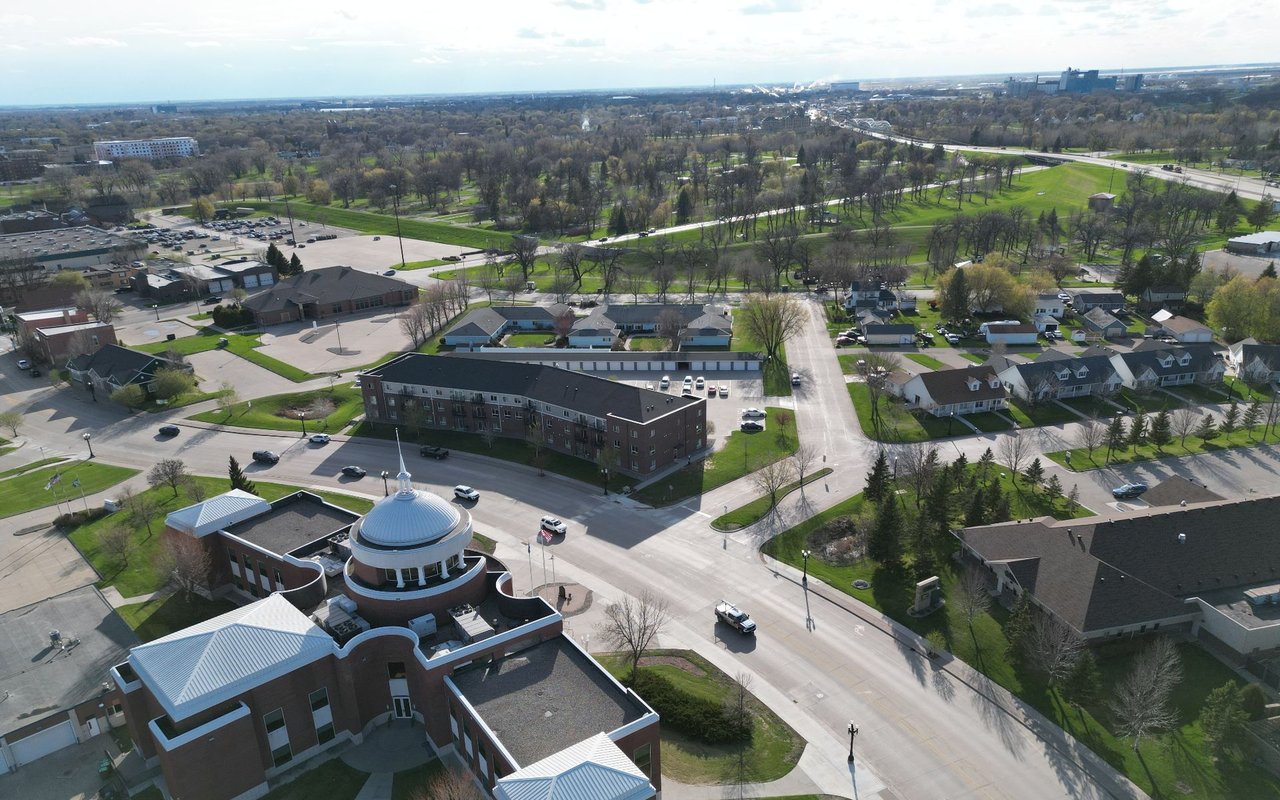
The city draws a distinctive mix. College students and faculty gravitate toward the older, walkable core around Minnesota State University Moorhead and Concordia College. Young professionals working in healthcare, manufacturing, and technology tend to plant roots here because their paycheck stretches further than it would in a coastal market. And families keep the southern subdivisions growing, pulled in by newer construction and strong schools. Layered underneath all of it is a deep bench of longtime residents who give Moorhead its steady, unpretentious character. If you want a community that grows without lurching, Moorhead fits.
Moorhead Housing Market Overview
Moorhead's market today is best described as a warm seller's market that has finally exhaled. Demand still tilts slightly in sellers' favor, but the frantic, sight-unseen bidding of a few years ago has given way to something far more livable for buyers.
Pace tells the story. The median home now spends roughly 39 to 51 days on the market, which means buyers usually have time for a second walkthrough and a night to think before writing an offer. Competition hasn't vanished, but it's concentrated: about 24% to 25% of homes still sell above list price, typically the move-in-ready starter homes, while the average sale-to-list ratio sits comfortably around 97% to 99%. Sellers are getting close to their asking price, and buyers still have room to negotiate a repair credit or a rate buydown.
On price, expect a median sale price of roughly $258,000 to $274,000. Median listing prices run higher, closer to $310,000 to $330,000, largely because newer, larger construction is entering the supply. With mortgage rates easing toward the upper 5% range, buyers who had been sitting on the sidelines are beginning to come back, which keeps the whole market balanced rather than lopsided.
Moorhead Real Estate Trends
The defining trend in Moorhead is durable, sustainable growth rather than boom-and-bust swings. Home values are appreciating at a measured 2.2% to 4.6% year-over-year — the kind of "Goldilocks" pace that keeps building equity without pricing local families out of the neighborhoods they grew up in.
Inventory is slowly loosening. Active listings have climbed past 300 properties, helped considerably by local construction; more than 100 fully serviced buildable lots opened up heading into the season, with developments like Partridge Creek widening the options on the south side. That new supply is feeding a "move-up" ripple effect. Buyers who purchased affordable starter homes around 2020 are now trading up for finished basements, flex rooms, and home-office space, and their listings become the next generation of starter homes.
Fueling all of this is population. The greater Fargo-Moorhead metro has grown roughly 15% over the past five years, powered by a regional economy anchored in healthcare, manufacturing, and technology. That growth also shows up in rentals, where the average rent of $1,335 to $1,400 has jumped more than 11% year-over-year as students and young professionals arrive. The short version: demand keeps arriving faster than the region can build, which is why the market stays firm even as it normalizes.
Investment Properties in Moorhead
For investors, Moorhead reads as a defensive, cash-flow-first market rather than an appreciation gamble. Because it anchors the eastern edge of a two-state metro, it enjoys steady regional demand without the wild price swings of primary coastal cities.
Rental yield is the headline. Gross yields here generally land between 5.5% and 8%, comfortably above the national norm. The engine is the student and young-professional population tied to MSUM and Concordia, and demand skews hardest toward duplexes, triplexes, and mid-sized three-bedroom single-family homes, which rent for roughly $1,450 to $1,465 a month.
Appreciation is modest but dependable — that same 2.2% to 4.6% annual growth. You won't see Sunbelt-style double-digit spikes, but you also carry structurally low risk of a sudden correction, thanks to the entrenched local job base in healthcare, agriculture logistics, and tech.
Fix-and-flip works here, but only with hyper-local discipline. The best opportunities are in the mature, tree-lined neighborhoods of North and Central Moorhead, especially near the colleges and downtown, where homes built between 1950 and 1980 often have solid bones but need cosmetic updates, layout modernization, and energy-efficiency work to handle brutal winters. Margins can be tight because the resale ceiling sits below neighboring Fargo, so flippers should hold firmly to the 70% rule — buying at no more than 70% of after-repair value minus renovation costs.
Buying a Home in Moorhead
The purchase process in Moorhead is active but rarely frantic, which is a relief for buyers coming from hotter markets. Well-kept starter homes under $300,000 move fastest, often going pending in 24 to 39 days, and while about a quarter of homes close above asking, multiple-offer situations tend to be strategic rather than desperate. You generally have time to do real due diligence.
Traditional buyer protections have firmly returned. The inspection contingency is essentially universal again, and in Moorhead those inspections carry local weight: because of the freezing winters and clay-heavy soil, expect close scrutiny of the foundation (for frost heaving or water intrusion), the roof's age, and furnace and HVAC efficiency. Financing and appraisal contingencies are the norm, and with the sale-to-list ratio around 99%, buyers and sellers are lining up realistically with independent appraisals. Seller concessions — credits to buy down the interest rate or offset closing costs — are increasingly common and often accepted.
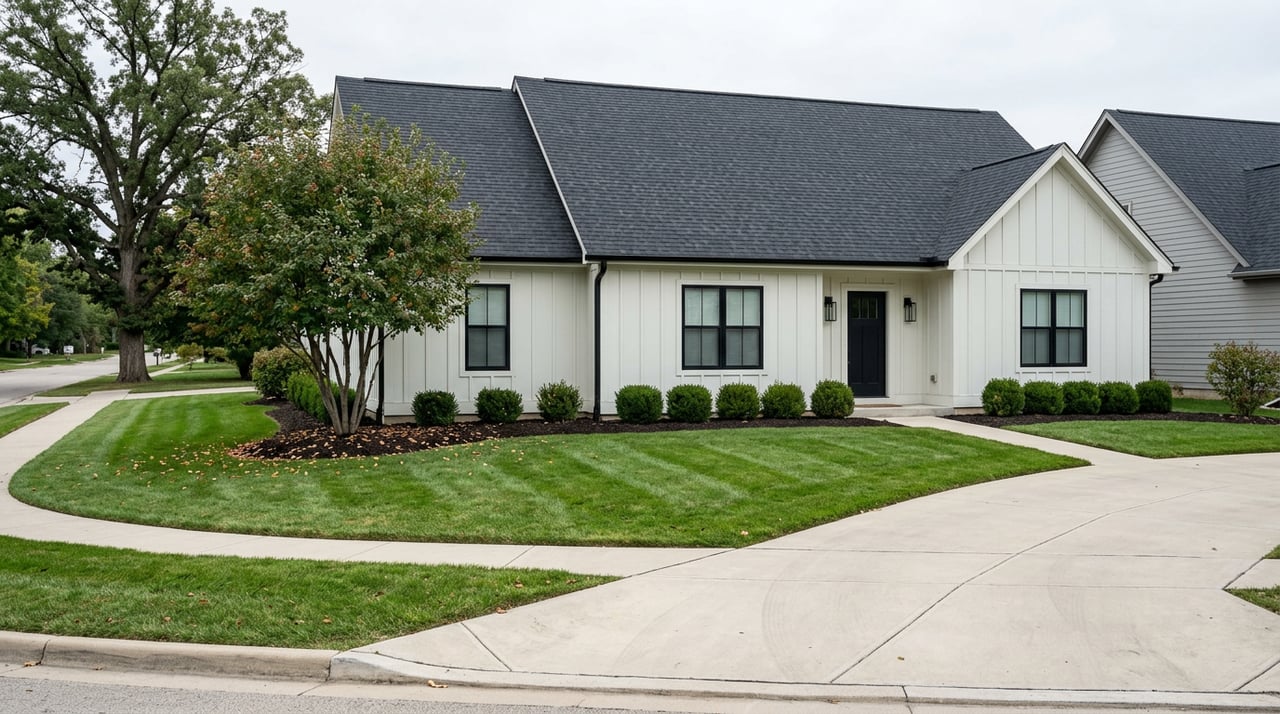
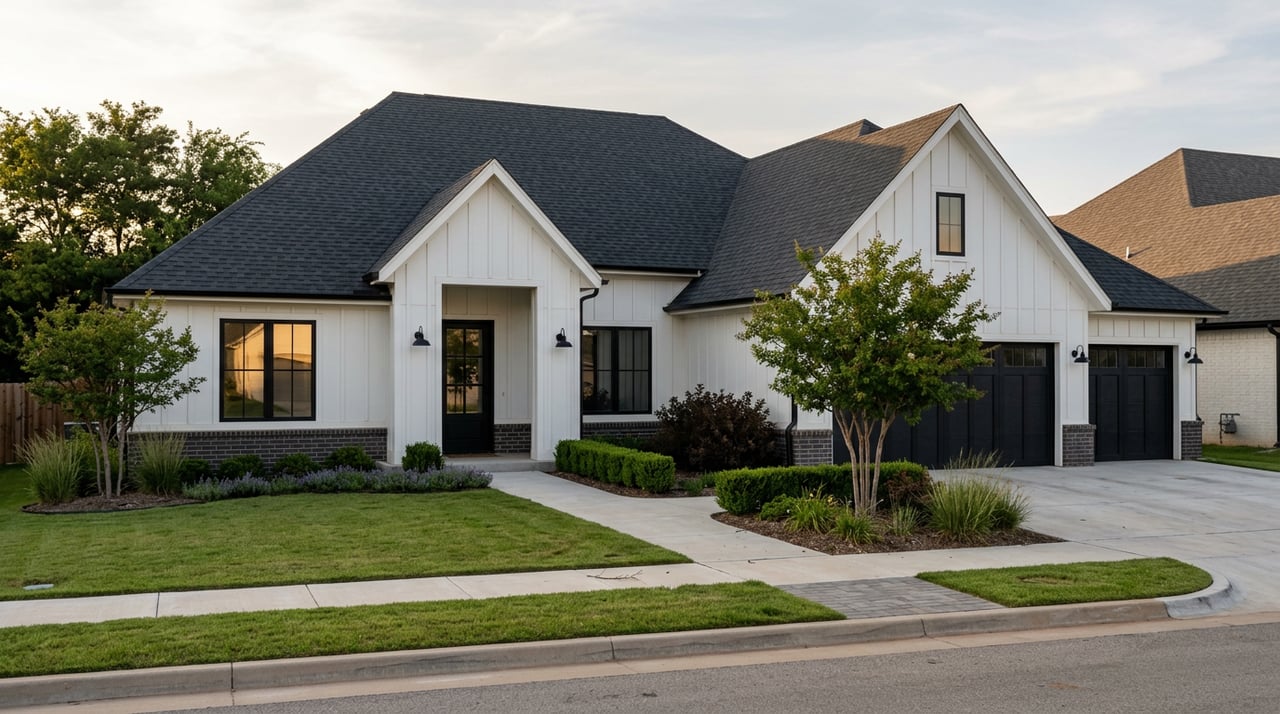
As for what you'll actually be touring, three property types dominate. Classic split-levels and bi-levels blanket the mid-century neighborhoods and are the default target for first-time buyers thanks to their efficient layouts. Historic and character homes cluster near the city center and the campuses, offering charm and large lots but demanding a careful look at insulation and aging utilities. And slab-on-grade and multi-story new construction is expanding fast along the southern edge, appealing to anyone who wants open-concept floor plans and near-zero structural maintenance.
Selling a Home in Moorhead
Selling here means understanding that the market has shifted out of the pandemic-era frenzy into something more measured. With a sale-to-list ratio hovering near 99.5%, buyers know local values cold and won't chase aspirational pricing.
The sweet spot is the $230,000 to $300,000 band, where first-time buyers and investors compete hardest and inventory is tightest. Price accurately in that range and you have a real shot at a mild bidding war that nudges your final number above list. Above $350,000, especially for newer or larger homes on the south side, you're competing directly with new construction and buildable lots, so pricing must track recent neighborhood sales precisely.
Moorhead buyers prize utility over staging theater. The first thing a seasoned local buyer checks isn't the backsplash — it's the age of the furnace, the condition of the roof, and the baseline insulation. If your mechanicals are pushing 15 to 20 years, offering a home warranty or an upfront credit protects your deal through inspection. Because skilled contracting labor is booked out, move-in-ready homes command a genuine premium, so it pays to clean out the lower-level family room, make sure basement spaces feel dry and well-lit, and keep cosmetic upgrades focused on fresh flooring and neutral walls.
On velocity, plan around a median of roughly 39 days. Your first two weekends are the golden window when serious buyers show up. If you hit day 45 with no offer, agents in the area will start assuming the home is overpriced, and a strategic price adjustment becomes hard to avoid.
Moorhead Home Buying Tips
A few things about buying here genuinely don't apply anywhere else, and knowing them ahead of time keeps a deal from unraveling.
First, respect the two-state dynamic. Thousands of people cross the river between Moorhead and Fargo every day, and it matters to your wallet: Minnesota has a state income tax; North Dakota does not. Moorhead often offsets that with different property tax treatment and local perks, but you should run your true net take-home pay through your pre-approval before you fall in love with a price point.
Second, never skimp on the foundation inspection. The Red River Valley sits on clay-dense soil that contracts in dry summers and expands during spring thaws, which causes real foundation movement. Make sure your inspector looks hard for step-cracks in block foundations and any bowing walls, especially in older homes near the colleges.
Third, audit the special assessments. This is the region's most common hidden cost. When the city installs infrastructure — new roads, water mains, flood mitigation — it frequently bills property owners through "specials." Ask directly: What specials remain on this property, and will the seller pay them off at closing? On a newer south-side build, high specials can quietly add hundreds of dollars to your monthly payment.
Finally, use the calendar to your advantage. The market breathes with the seasons, and spring and summer bring the heaviest family-driven competition. If you have flexibility, shopping between November and February thins the field dramatically — and a seller who listed during a sub-zero blizzard is usually highly motivated to deal.
How to Price Your Home in Moorhead
Pricing in Moorhead is an exercise in respecting a practical, price-conscious buyer. With the sale-to-list ratio sitting between 99.1% and 99.5%, buyers here pay what a home is worth and almost never more.
When you build your comps, keep them honest to the micro-market. Stay strictly on the Minnesota side of the Red River — a nearly identical home a mile and a half away in Fargo operates under a different tax structure and isn't a true comparable. Segment by era and style, too: a 1920s home near Concordia carries a completely different renovation and maintenance profile than a 2010s slab-on-grade build on the south edge, and buyers price them accordingly. And with active inventory now above 300 homes, pull comps that went pending within the last 90 days so you're capturing the current rate environment rather than last year's.
Pricing psychology matters just as much as the comps. Most buyers search through portals with rigid brackets, so a home realistically worth $302,000 will reach far more traffic listed at $299,900 than at $304,000. Because a large share of homes sell slightly below list, buyers like to feel they've won a small concession — which means pricing right at fair market value keeps your days on market low, while padding the number "just to see" tends to stall the listing. And if your home carries remaining specials, you have a choice: price a bit lower and let the buyer assume them, or price at market and offer to pay them off at closing. That second option is a genuinely powerful hook against new-construction competition.
Moorhead Walkability & Commute
Moorhead is largely a vehicle-oriented city, but that headline hides some real variation and one standout feature.
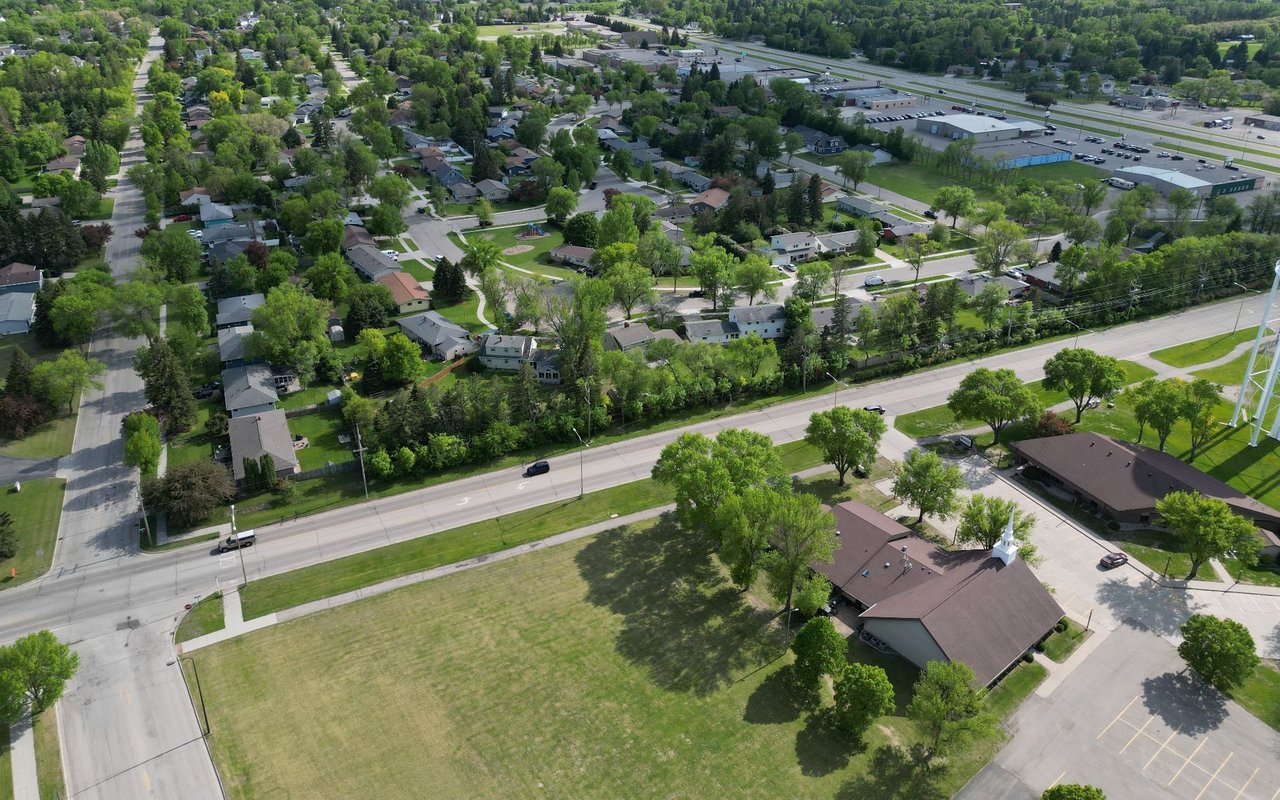
Walkability concentrates in the older core. The neighborhoods around MSUM, Concordia, and downtown post walk scores in the 55 to 70 range, with mature sidewalk grids that let residents handle daily errands and campus life on foot. Move to the rapidly growing southern and northern subdivisions, and walk scores drop to the 10 to 30 range — retail, groceries, and medical services cluster along arterial roads rather than weaving through the blocks, so a car becomes essential.
Where Moorhead genuinely shines is biking. The Red River Trail system offers miles of flat, paved paths along the riverbank, letting cyclists commute north-south entirely separated from traffic, with cross-river bridges feeding directly into downtown Fargo. Public transit runs through MATBUS, the metro's coordinated Fargo-Moorhead bus network, which is especially popular with students who often ride free or discounted, though most working professionals still drive.
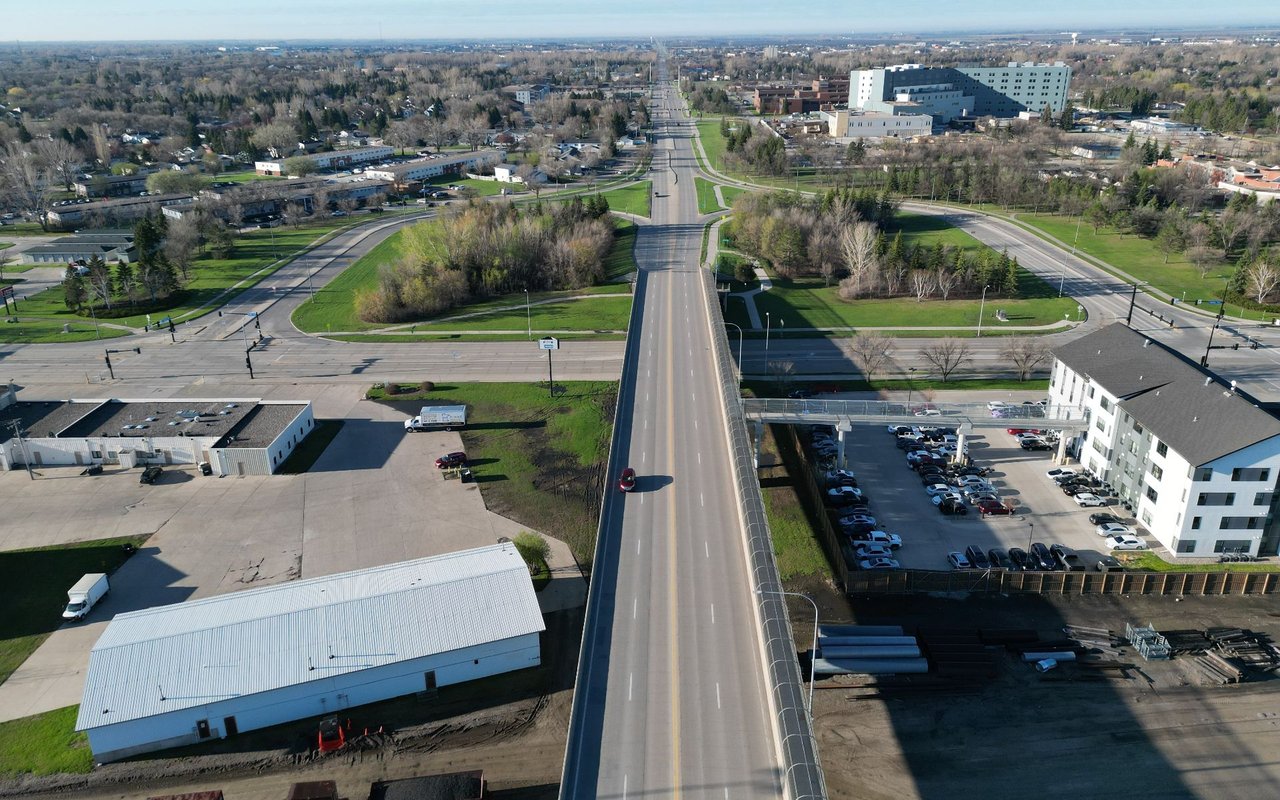
The best part of living here, though, is the commute itself: an average of just 16 to 18 minutes. With Interstate 94 and Highway 10 cutting through the city, getting from a south Moorhead driveway to major employers like Sanford Health, Essentia Health, NDSU, or the West Fargo logistics hubs rarely takes more than 20 minutes, even at peak.
Moorhead Schools
For family buyers, schools are frequently the deciding factor, and Moorhead's system is a real selling point. The city is served primarily by Moorhead Area Public Schools (Independent School District 152), a consolidated district of more than 7,500 students known for strong community support, well-regarded teachers, and a deep athletic tradition.
The district earns an above-average B grade on Niche, scoring especially well for teacher quality and student diversity. Statewide proficiency metrics run around 40% in math and 44% in reading — a touch below the Minnesota average — but the district stands out for graduation outcomes and for actively closing achievement gaps through credit-recovery and student-support programs.
A few schools anchor the system. On the growing south side, S.G. Reinertsen Elementary (B) is among the top-ranked in the city, with a 14:1 student-teacher ratio and 54% math proficiency, and Dorothy Dodds Elementary (B) is a modern favorite among families in the newer subdivisions. Horizon Middle School (B), split into East and West campuses, handles 5th through 8th grade at a scale that supports an unusually broad range of electives, music, and clubs. At the top sits Moorhead High School (B+) — home of the Spuds — with strong college-prep resources, robust career and technical education, and one of the state's top athletic programs.
Parks & Outdoor Space in Moorhead
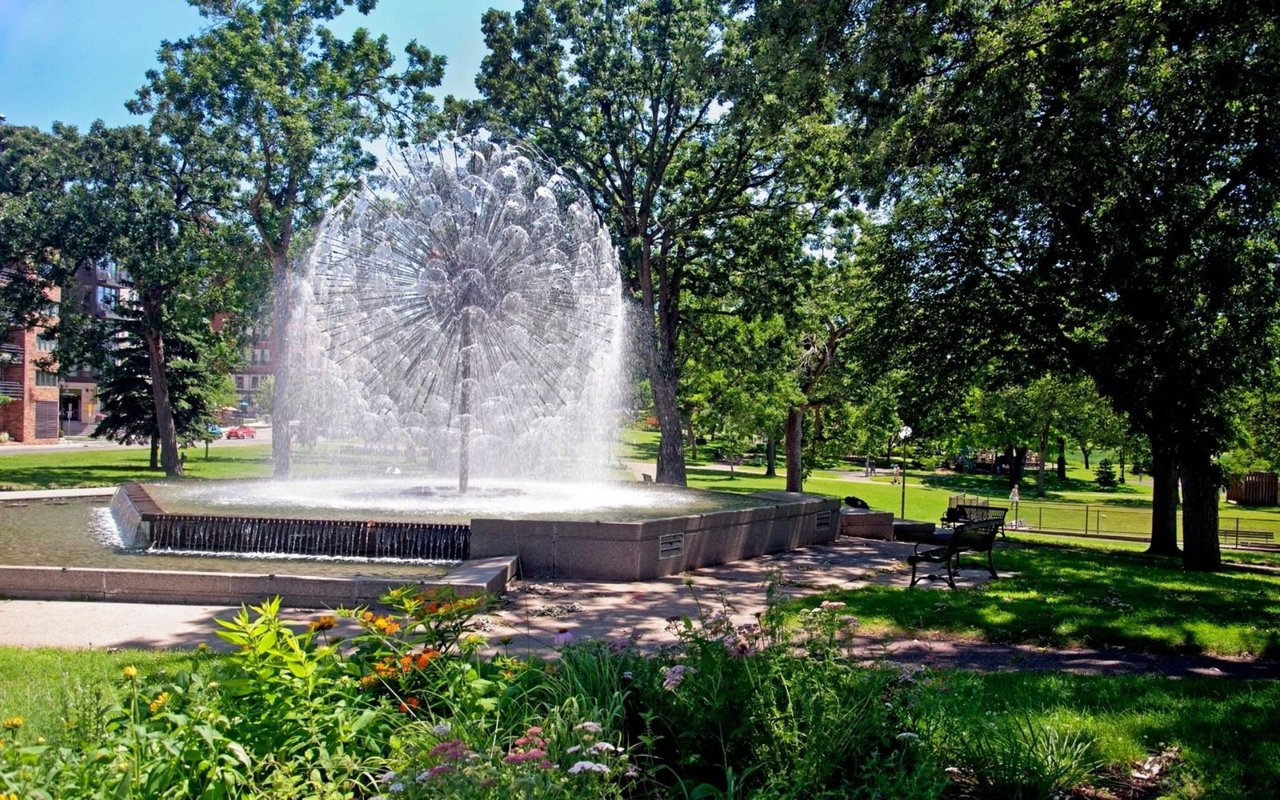
Moorhead manages more than 40 parks, turning the flat valley into a genuine outdoor amenity that many buyers underrate until they live here.
The centerpiece is the Red River Corridor Trail, a continuous 16-mile paved pathway running along the wooded riverbank from Oakport down to the Bluestem Amphitheater, with pedestrian bridges linking into Fargo's network. Beyond it, a few parks are worth knowing by name. M.B. Johnson Park on the north edge is the standout for the outdoorsy — summer walking paths, a boat ramp, and a 4-mile mountain-biking trail that converts to groomed cross-country skiing, snowshoeing, and fat-tire riding in winter. Families lean on the Rotary Natural Play Hill & Bike Park for its nature-based climbing structures and dirt paths, while Southside Regional Park and the Centennial Athletic Fields host the youth baseball, softball, and soccer leagues. Golfers, meanwhile, have two well-kept public courses, The Meadows and Village Green, woven right into residential neighborhoods.
Dining & Nightlife in Moorhead
Moorhead's food and nightlife scene reads as a lifestyle signal more than a destination: unpretentious, community-minded, and increasingly creative. Where Fargo across the river offers a dense downtown, Moorhead leans into a relaxed, neighborhood-centered vibe shaped by its two student populations and a rising young-professional crowd.
The social anchor is Junkyard Brewing Company in North Moorhead, effectively the community's living room, with rotating experimental taps, live local music, and food-truck culture year-round. The cocktail side is maturing too, exemplified by spots like the Starbird Lounge, a television-free, mid-century-inspired neighborhood bar built around curated music and classic mixology. Underneath the trendier openings, the culinary baseline blends upper-Midwest comfort food with progressive local concepts — scratch-made global dishes at places like Sol Ave. Kitchen, a strong local coffee-house culture, and a distinct seasonal rhythm where summer patios give way to cozy winter taprooms.
Moorhead HOA & Community Rules
Whether or not you'll deal with an HOA in Moorhead comes down almost entirely to which era of housing you buy into.
In the historic and college neighborhoods of North and Central Moorhead — the classic mid-century split-levels and character homes near Concordia and MSUM — HOAs are effectively nonexistent. You answer only to standard city ordinances on things like snow removal and lawn height. For buyers who want freedom over paint colors, outbuildings, or parking an RV, these areas are the obvious choice.
The modern subdivisions of South Moorhead, including master-planned pockets like Partridge Creek, are a different story; HOAs are a standard part of the purchase. Fees are generally modest by national standards, running about $30 to $100 per month for single-family subdivisions and scaling higher for townhome communities that fold in snow removal and exterior maintenance. Expect architectural controls governing exterior finishes, fence heights, and outbuildings, and pay particular attention to the "winter clauses" many townhome associations carry, which spell out exactly how much snowfall triggers mandatory plowing. During your contingency period, always review the covenants and check the health of the association's reserve fund.
Talk to a Moorhead Real Estate Expert
If you're weighing a move in Moorhead — buying your first split-level, trading up to a south-side new build, or lining up a cash-flowing rental near the colleges — it helps to have someone who knows these blocks, these seasons, and these quirks firsthand. That's where Up North Real Estate comes in. As a team serving Fargo, Grand Forks, Moorhead, Horace, Detroit Lakes, and the greater Lakes Region, we pair genuine local knowledge with the sharp marketing, negotiation, and problem-solving that turn a good outcome into a great one. Whether you're selling and want to command a premium, or buying and want to land the right home at a price you're comfortable with, we treat the transaction like partners invested in your result — not just agents closing a file. Reach out through upnorthrealtygroup.com to start the conversation, get a home valuation, or simply ask the local questions that don't have easy online answers. We'd be glad to help you buy or sell in Moorhead with zero regrets.