131,261 people live in Fargo, where the median age is 32.5 and the average individual income is $42,455. Data provided by the U.S. Census Bureau.
Total Population
Median Age
Population Density Population Density This is the number of people per square mile in a neighborhood.
Average individual Income
Fargo is the kind of place that quietly wins people over. It doesn't announce itself the way coastal metros do, but the people who move here tend to stay, and the ones who grew up here tend to come back. What draws buyers is a rare combination: a genuine urban core with independent restaurants and historic character, wrapped around some of the most affordable, well-built new construction in the Upper Midwest, all anchored by an economy that simply doesn't slow down.
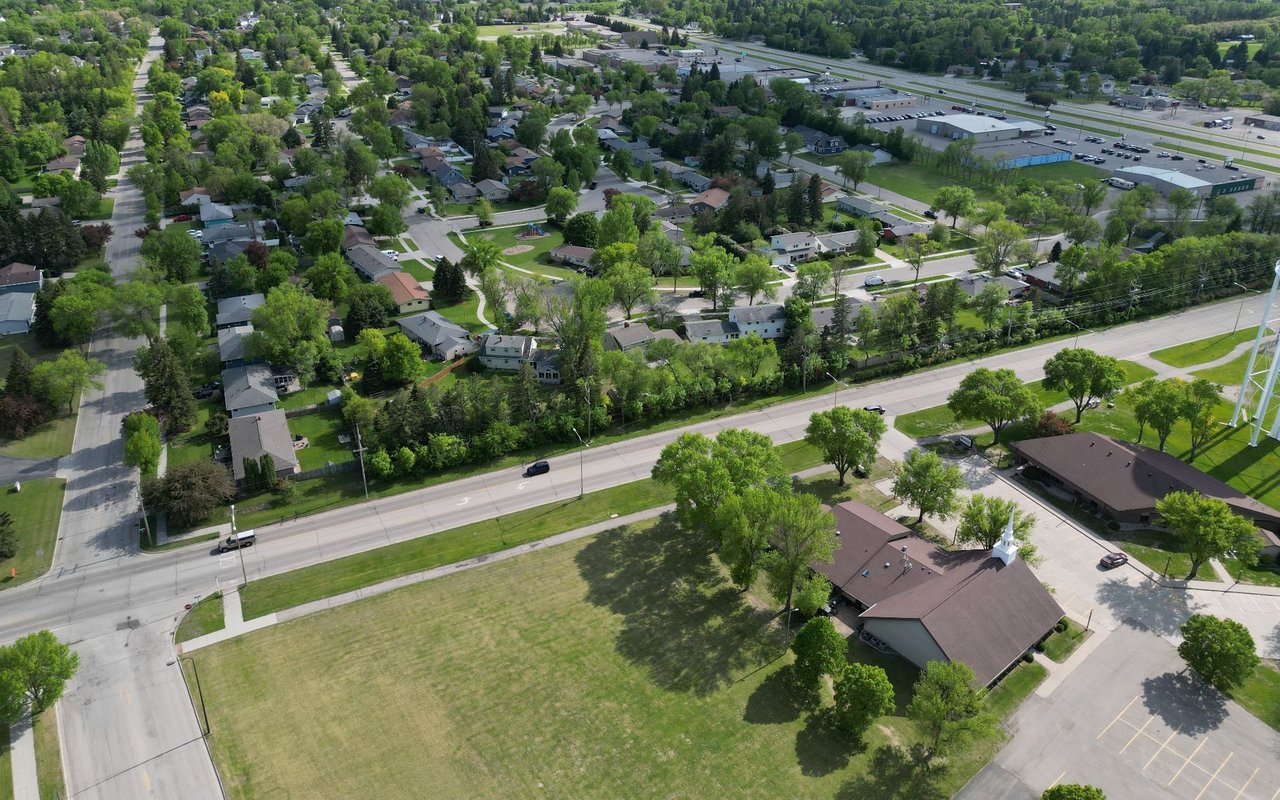
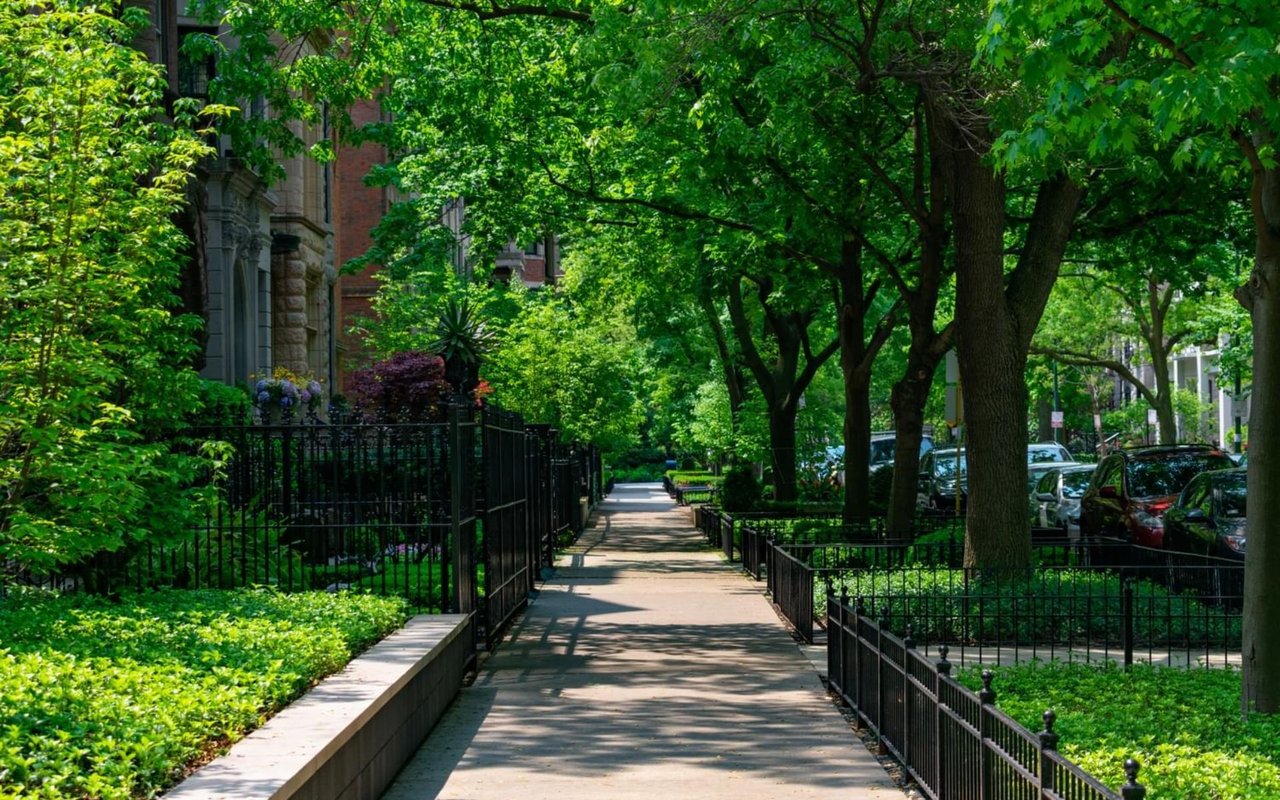
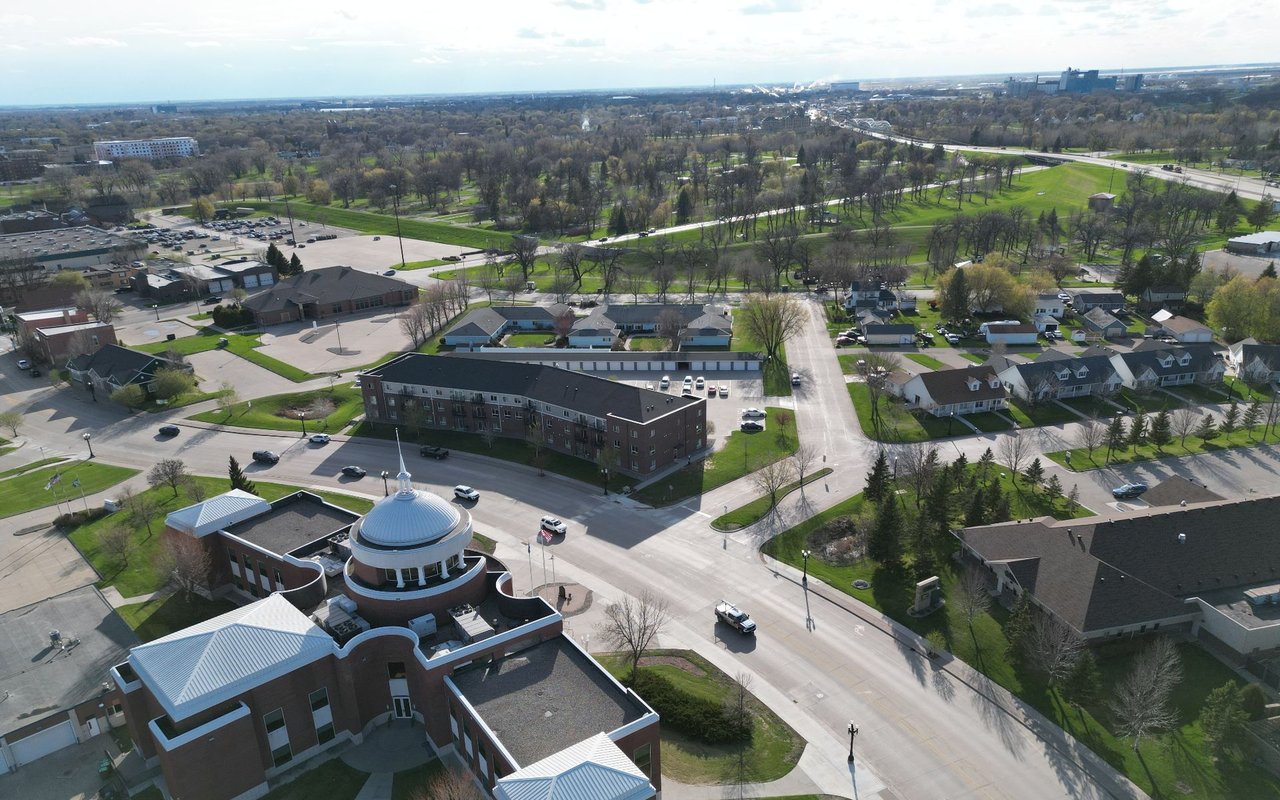
The city sorts naturally into three personalities. North Fargo carries the older soul of the city, with mature tree canopies, walkable streets near North Dakota State University, and a strong first-time-buyer footprint. Central Fargo, including Downtown and the neighborhoods around South High, is where character homes and a lively urban scene live side by side. South Fargo is the growth engine, full of modern subdivisions, energy-efficient homes, and master-planned communities built for families who want turnkey living. Understanding which Fargo you're buying into is the single most important thing a buyer here can learn, and it shapes everything that follows in this guide.
The Fargo market today is best described as warm and stabilizing. The frantic bidding wars of the early decade have cooled into something healthier for everyone involved. Demand is still strong, supported by regional job growth and steady population gains, but buyers finally have room to think.
Homes generally go under contract in about 36 to 43 days, a measured pace that lets buyers actually tour, evaluate, and negotiate rather than waive every protection to win a house. The sale-to-list price ratio sits near 99.5%, so well-priced homes are still selling close to asking, but roughly half of recent sales have closed slightly below list, and contingencies like inspections and repair requests are firmly back in play.
On price, the citywide median sale sits around $310,000 to $315,000, while average list prices run higher, closer to $360,000 to $399,000, reflecting a wave of newer, higher-end inventory. That gap between median and average is itself a signal: the middle of the market is where the action is, and the upper tier is where negotiating leverage has shifted decisively toward buyers.
The defining story of the current market is normalization, driven by two forces working together: more inventory and easing mortgage rates.
As 30-year fixed rates have settled into the low-to-mid 6% range, sellers who spent years locked in by ultra-low legacy rates are finally listing, usually because life demanded it, and inventory has climbed by double digits year over year. That relief has taken the pressure off buyers without collapsing prices.
The second trend is how sharply segmented Fargo has become by geography. This is not one market; it's three, and pricing reflects it clearly:
Region | Character | Median Listing Price |
|---|---|---|
South Fargo (Maple Valley, Centennial, Brandt Crossing) | Competitive, new-construction-heavy, modern and energy-efficient homes | $439,900 |
Central Fargo (Downtown, Hawthorne, South High) | Walkable, historic, strong demand for character homes | $264,950 |
North Fargo (Northport, Roosevelt) | Affordable starter homes and first-time-buyer options near NDSU | $292,500 |
Buyer priorities have shifted alongside these trends. With higher baseline costs, people are gravitating toward move-in-ready homes and functional features like dedicated work-from-home space. Starter and mid-priced homes remain the fastest movers, while anything needing serious renovation is sitting noticeably longer. Looking forward, the outlook is moderate and sustainable: values in the region are projected to appreciate at roughly 2% to 4% annually, a pace that keeps equity growing without triggering an affordability shock.
Fargo is one of the more compelling investment markets in the region, and the reasons are structural rather than speculative: a sub-4% unemployment rate, steady population growth, and a large captive rental base fed by NDSU, Sanford Health, and major employers like Microsoft. The right strategy, though, depends entirely on which part of the city you're buying in.
For cash flow, North and Central Fargo are the play. Duplexes, triplexes, and older single-family homes near NDSU or Downtown produce the strongest cash-on-cash yields in the metro. Median rents in North Fargo run around $900, but multi-unit or multi-bedroom configurations near campus routinely generate gross yields that outpace local borrowing costs.
For appreciation and equity growth, South Fargo is the engine. Cap rates are tighter here because listing prices are higher, hovering near $439,950, but vacancy is extremely low, and this is where the city's steady capital appreciation lives, projected at 2% to 5% annually. Tenants tend to be stable, long-term families willing to pay premium rents that average around $1,895.
For value-add investors, the core central neighborhoods offer opportunity, though it takes discipline. True deep-discount flips are scarce because entry-level buyers compete for the same character homes built between 1920 and 1960 in areas like Hawthorne, Roosevelt, and South High. The smarter angle right now is a light value-add: buying structurally sound but cosmetically dated homes in the $175,000 to $250,000 range, modernizing kitchens and creating flex workspace, and capturing the premium that buyers are paying for turnkey properties.
Buying in Fargo has changed from chaotic to strategic, and your experience will depend heavily on your price point.
If you're shopping entry-level single-family homes under $315,000, expect moderate to high competition. Well-priced, move-in-ready starter homes still move quickly, often going pending in 15 to 30 days. If your budget lands in the move-up or luxury tier, from roughly $400,000 to $700,000 and beyond, the balance tips in your favor. Homes in that range average 45 to 60-plus days on market, which gives you time to tour, compare, and negotiate seriously.
Contingencies have returned to contracts as the market has cooled. Home inspections are standard and strongly recommended, especially in Central and North Fargo where older foundations, dated wiring, and tree-root intrusion into sewer lines are genuine concerns. Appraisal gaps, where buyers promised to cover shortfalls in cash, have largely disappeared, and contracts are now firmly contingent on standard financing. One of the most common and successful moves right now is asking for seller concessions to buy down the interest rate, typically a credit of 1% to 2% of the purchase price at closing.
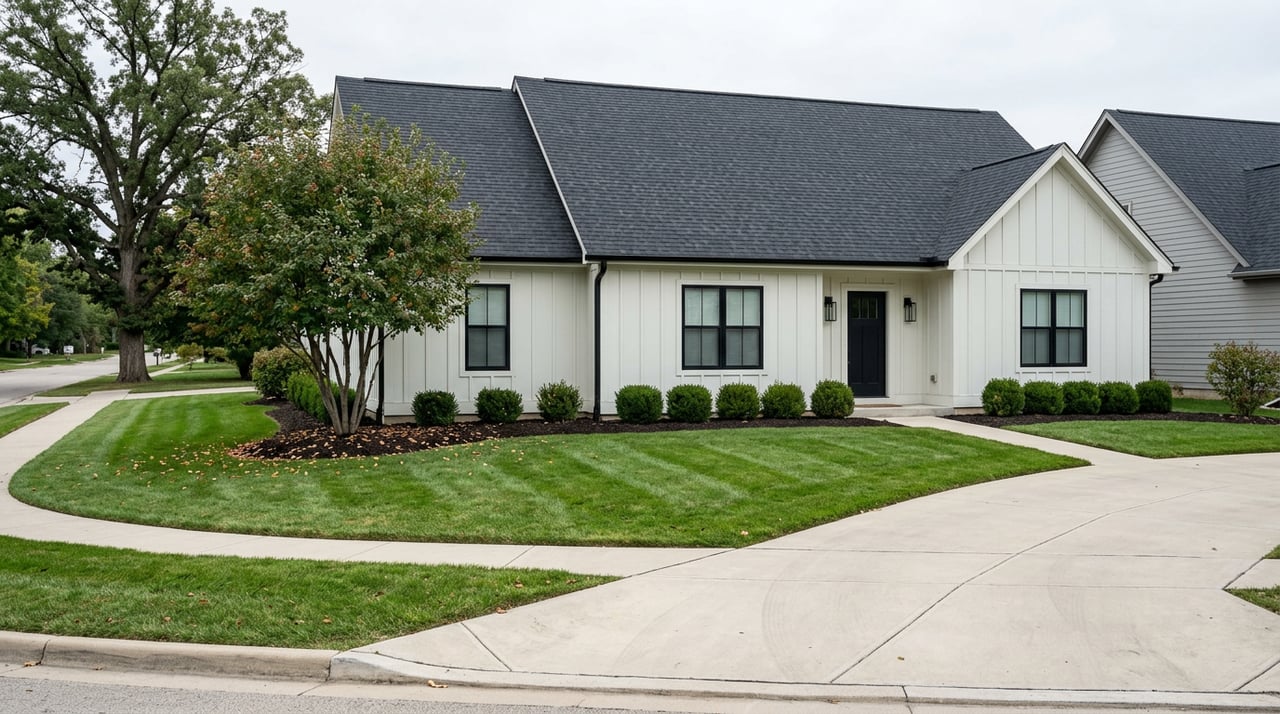
The kind of home you'll find depends on when the neighborhood was built. Pre-1960s North and Central Fargo is the character era, full of Craftsman bungalows, two-story traditionals, and mid-century ramblers with hardwood floors and mature trees. The 1970s through 1990s brought split-foyers and bi-levels to mid-south and Westgate areas, functional and popular as mid-tier starters. The far south, from the 2000s onward, is the modern era: large two-story traditionals, single-level patio homes, and a deep supply of low-maintenance townhomes and twin homes.
The "list it and they will come" days are over. Selling well in Fargo now takes precise execution, and it starts with how you bracket your price.
Fargo buyers are unusually sensitive to online search filters, and the most active buyer pool searches between $250,000 and $400,000. Pricing at $399,900 captures everyone shopping "under $400k," while $405,000 quietly pushes your listing into a higher tier where it competes against newer, larger homes. Just as important, you cannot price a Fargo home without accounting for Special Assessments, the tax levies North Dakota uses to fund roads and water lines. If your home carries $15,000 in outstanding specials and a comparable nearby home carries none, you either adjust your list price or offer to pay them off at closing.
Staging matters more than sellers expect, precisely because buyer traffic is intentional rather than frenzied. Buyers here actively look for functional layouts, and staging a spare bedroom or basement nook as a work-from-home flex space adds tangible value. Neutral, minimalist staging that maximizes the sense of square footage, particularly in split-foyers and bi-levels, frequently returns 1% to 5% on the final offer and cuts days on market.
As for pace, a properly priced listing tends to follow a rhythm. Days 1 through 14 are peak activity, when buyers with saved alerts come through. Days 15 through 36 stabilize, with showings slowing but qualified buyers still active; the citywide median to a pending contract sits right around 36 days. Cross day 45 without an offer and the listing risks going stale in local search algorithms, usually requiring a 3% to 5% correction to re-engage the market.
A few pieces of local knowledge separate confident Fargo buyers from surprised ones.
First, audit the "specials" before you fall in love with a home. Special assessments are unique to North Dakota infrastructure funding, and a home that looks affordable in South Fargo can carry an extra $300 to $500 a month tacked onto the tax bill, enough to derail your debt-to-income ratio. Always ask what the balance is and what the annual payoff looks like.
Second, win with rate buydowns, not price cuts. If a home has been listed for more than 30 days, offering full asking price with a request for a 2-1 temporary or permanent rate buydown, funded by seller concessions, will usually save you far more monthly than shaving a little off the principal.
Third, respect the clay. Fargo sits on the ancient bed of Lake Agassiz, which means dense, shifting soil. When touring older homes in Central or North Fargo, take a flashlight to the basement and look for horizontal wall cracks, bowing sheetrock, or recently added sump pumps. A foundation issue can run $10,000 to $30,000 to brace, so make your offer contingent on a rigorous inspection.
Finally, factor in the winter footprint. A long, north-facing driveway means shoveling drifted snow that never sees enough sun to melt, and a finished mudroom or garage drop-zone is something Fargo families genuinely value. In this climate, layout is livability.
Pricing here blends standard comparable-market analysis with a few hyper-local realities.
Geography and timing are strict. Because Fargo has grown through distinct subdivisions, a comp from even two miles away can distort your valuation, so keep comps within the exact neighborhood boundary and stick to sales settled within the last 90 days. With rates and buyer leverage shifting quickly, six-month-old data reflects a different market entirely.
The critical adjustment is, again, special assessments. If you list at $350,000 with $18,000 in outstanding specials, you're competing directly against homes carrying zero balance. You have two clean options: price at true market value and clearly state that sellers will pay off all specials at closing, which buyers love, or discount below the competition to account for the debt they'll inherit.
Then there's the psychology of digital filters. The retail instinct is to price at $399,900, but a buyer who sets their search from $400,000 to $500,000 will never see it. If your home is worth around $400,000, pricing it exactly there captures the top of the "under $400k" bracket and the bottom of the "over $400k" bracket at once, effectively doubling your online exposure.
Fargo has one of the more distinctive commuting profiles in the country: some of the shortest drive times anywhere, paired with pedestrian infrastructure that swings sharply between historic hubs and suburban sprawl.
The Downtown core is genuinely walkable, with a Walk Score around 95 and a Bike Score near 80. Residents along the Broadway corridor can live a car-light life, with groceries, restaurants, the library, and gyms all on foot, and a downtown skywalk system keeps that practical even in sub-zero weather. The Roosevelt and NDSU border area scores in the 65 to 75 range, with mature sidewalks and easy walking or biking to campus. South and West Fargo, by contrast, score between 10 and 30; the newer neighborhoods have beautiful recreational paths, but walking to grab groceries is impractical amid the wide roads and commercial setbacks.
Transit runs through MATBUS, the Metro Area Transit system, which reliably connects NDSU, Downtown, the West Acres shopping district, and Moorhead, and is heavily used by students. Most working professionals, though, drive, and here Fargo shines. The city's flat terrain and lack of natural bottlenecks produce what locals call the 18-minute rule, with average one-way commutes of just 17.6 to 18 minutes. The major employment centers are spread efficiently: the medical and tech corridor near I-94 and 45th Street in the southwest, home to Sanford Medical Center; the academic and research core around NDSU in the north; and the enterprise hub near the I-29 and I-94 convergence, including the major Microsoft campus, which makes for a quick reverse commute from the older northern neighborhoods.
Schools are one of the biggest drivers of where families buy here, and Fargo is served primarily by Fargo Public Schools, a district well regarded across North Dakota for strong academic funding, career programming, and extracurriculars. The district runs a strict geographic feeder system that sorts the city into three secondary tracks, and family buyers routinely trace a home's address straight to its high school zone before making an offer.
The Davies track in south and southeast Fargo is the most requested among modern family buyers. Anchored by Davies High School and fed by Discovery Middle School along with high-performing elementaries like Bennett and Centennial, it serves the fast-growing southern subdivisions and consistently earns top state marks academically and athletically. The North track, anchored by Fargo North High School and Ben Franklin Middle School, covers established neighborhoods near NDSU and is known for strong AP enrollment and deep community roots, with feeders like Longfellow and Washington. The South track, anchored by Fargo South High School and Carl Ben Eielson Middle School, spans the diverse midsection of the city and is known for decorated music, theater, and arts programs alongside technical tracks, pulling from elementaries like Lewis & Clark and Clara Barton.
Beyond the core district, families often target West Fargo Public Schools, which overlaps into parts of southwest Fargo. For private and parochial options, the Fargo Catholic Schools Network, anchored by Shanley High School, and Oak Grove Lutheran School both offer continuous pre-K through 12th-grade education with regional enrollment.
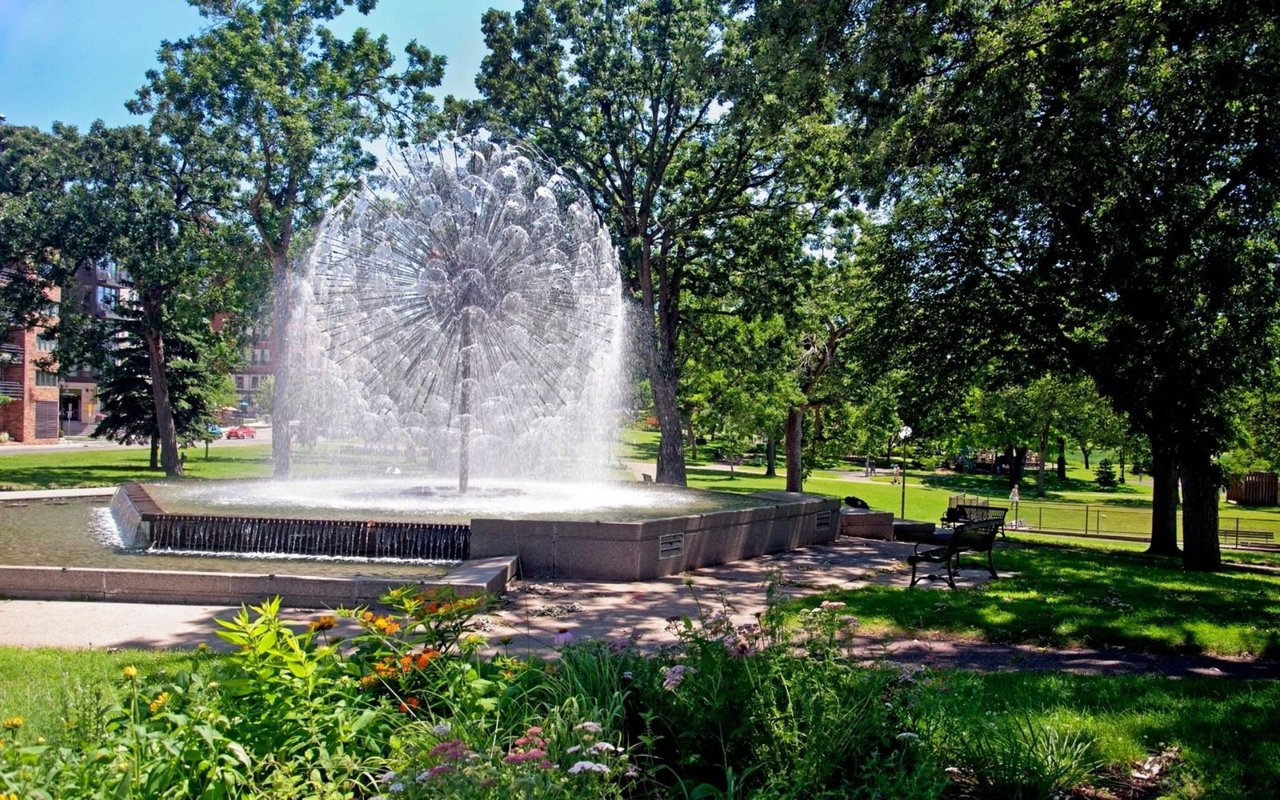
For a northern-plains city, Fargo's green space punches well above its weight. The Fargo Park District manages more than 2,100 acres of parkland and over 100 miles of multi-use trails, and these spaces function as real neighborhood anchors that support home values rather than mere amenities.
The centerpiece is the Red River Trail, a continuous paved network tracing the river that links major parks, from the wooded campsites and cross-country ski trails of Lindenwood Park to the premier disc golf courses at Oak Grove Park. In the newer southern subdivisions, parks like Brandt Crossing and Timber Creek are designed as active hubs, with modern playgrounds, summer splash pads, and fenced dog parks. Because winter reshapes outdoor life here, the district also maintains warming houses, groomed ski routes, and outdoor hockey rinks at spots like Washington Park, keeping neighborhoods active year-round. Public golf is woven right into the residential fabric too, with championship courses like Rose Creek in the south and Edgewood in the north lifting values for homes along their fairways.
Fargo's food and nightlife scene works as a lifestyle signal, and it splits cleanly into two moods. Downtown and Central Fargo carry an urban, fiercely independent energy: craft cocktail lounges, boutique coffee roasters, and chef-driven restaurants set inside converted historic warehouses. On weekends the streets fill with young professionals, academics, and the arts crowd moving between microbreweries, live-music cellars, and food halls. It signals a connected, walkable lifestyle where dinner is an event.
South Fargo offers the counterpoint, a more suburban and convenience-driven scene built around upscale gastropubs, patio dining, and wine bars clustered near retail centers like Timber Creek and 45th Street. It's optimized for easy parking, family brunches, and relaxed evenings rather than late nights. Running through both is a distinctly Fargo trait: a strong year-round indoor social culture, with establishments investing in cozy, well-designed interiors that feel like a sanctuary through the long winters.
How your neighborhood is governed in Fargo tends to match the era it was built, and it directly affects both your daily freedom and your budget.
In the historic and mid-century neighborhoods of North Fargo, Downtown, and Hawthorne, HOAs are almost entirely absent. Guidelines come down to city code and municipal ordinance, which means high autonomy: your own exterior colors, freedom to landscape, and reasonable latitude on your own property. The tradeoff is that you rely on city enforcement to handle a neighbor's unkempt lawn or nuisance.
The modern master-planned communities of South Fargo, such as Osgood, EagleRun, and Brandt Crossing, run the opposite way, with active HOAs and strict architectural covenants as the baseline. Architectural Control Committees typically require formal approval before you paint, re-roof, or install a fence, and they enforce uniform aesthetics down to fence styles and colors. Expect rules on prompt snow removal, bans on overnight RV or boat parking, and requirements to keep trash bins out of sight. Single-family dues are usually modest, but townhome and condo associations carry higher dues to cover master insurance, lawn care, and collective snow removal. Because North Dakota doesn't heavily regulate HOAs at the state level, rules vary widely, so always review the CC&Rs and audit the association's financial reserves during your inspection window to avoid surprise special assessments.
If there's one takeaway from this guide, it's that Fargo rewards local knowledge. The difference between north, central, and south isn't cosmetic; it changes your price, your competition, your commute, your schools, and even your monthly tax bill through special assessments that out-of-state buyers rarely see coming. That's exactly where the right team earns its keep.
Up North Real Estate is a dedicated local team serving Fargo along with Grand Forks, Moorhead, Horace, and the Detroit Lakes region. Whether you're buying your first starter home near NDSU, weighing an investment property, or selling in a market that now demands real strategy, the team pairs deep regional expertise with genuine, hands-on guidance, the kind of partnership where you're not just hiring an agent but gaining someone invested in the outcome. Clients consistently describe the experience the same way: reliable, knowledgeable, and refreshingly straightforward from the first showing to the closing table. If you're ready to make a move in Fargo, or you simply want an honest read on your options, reach out to Up North Real Estate and start the conversation with people who know this market street by street.
There's plenty to do around Fargo, including shopping, dining, nightlife, parks, and more. Data provided by Walk Score and Yelp.
Explore popular things to do in the area, including Little Dukes, Mehl's Gluten-Free Bakery, and Stamart.
| Name | Category | Distance | Reviews |
Ratings by
Yelp
|
|---|---|---|---|---|
| Dining · $$ | 0.07 miles | 4 reviews | 1.8/5 stars | |
| Dining · $$ | 0.08 miles | 32 reviews | 4.8/5 stars | |
| Dining | 0.14 miles | 0 reviews | 0/5 stars | |
| Dining | 0.31 miles | 24 reviews | 4.8/5 stars | |
| Dining · $ | 0.39 miles | 69 reviews | 2.8/5 stars | |
| Dining | 0.44 miles | 0 reviews | 0/5 stars | |
| Shopping | 0.27 miles | 0 reviews | 0/5 stars | |
| Active | 0.09 miles | 0 reviews | 0/5 stars | |
| Active | 0.24 miles | 0 reviews | 0/5 stars | |
| Active | 0.3 miles | 0 reviews | 0/5 stars | |
| Active | 0.36 miles | 0 reviews | 0/5 stars | |
| Active | 0.37 miles | 0 reviews | 0/5 stars | |
| Active | 0.42 miles | 0 reviews | 0/5 stars | |
| Beauty | 0.11 miles | 0 reviews | 0/5 stars | |
| Beauty | 0.11 miles | 0 reviews | 0/5 stars | |
| Beauty | 0.17 miles | 0 reviews | 0/5 stars | |
| Beauty | 0.17 miles | 0 reviews | 0/5 stars | |
| Beauty | 0.17 miles | 0 reviews | 0/5 stars | |
| Beauty | 0.18 miles | 1 review | 5/5 stars | |
| Beauty | 0.29 miles | 11 reviews | 4.3/5 stars | |
| Beauty | 0.31 miles | 0 reviews | 0/5 stars | |
| Beauty | 0.41 miles | 0 reviews | 0/5 stars | |
| Beauty | 0.44 miles | 0 reviews | 0/5 stars | |
| Beauty | 0.48 miles | 0 reviews | 0/5 stars | |
|
|
||||
|
|
||||
|
|
||||
|
|
||||
|
|
||||
|
|
Fargo has 59,315 households, with an average household size of 2.7. Data provided by the U.S. Census Bureau. Here’s what the people living in Fargo do for work — and how long it takes them to get there. Data provided by the U.S. Census Bureau. 131,261 people call Fargo home. The population density is 2,662 and the largest age group is Data provided by the U.S. Census Bureau.
Total Population
Population Density Population Density This is the number of people per square mile in a neighborhood.
Median Age
Men vs Women
Population by Age Group
0-9 Years
10-17 Years
18-24 Years
25-64 Years
65-74 Years
75+ Years
Education Level
Total Households
Average Household Size
Average individual Income
Households with Children
With Children:
Without Children:
Marital Status
Blue vs White Collar Workers
Blue Collar:
White Collar: