5,136 people live in Horace, where the median age is 36 and the average individual income is $62,755. Data provided by the U.S. Census Bureau.
Total Population
Median Age
Population Density Population Density This is the number of people per square mile in a neighborhood.
Average individual Income
Horace sits about fifteen minutes southwest of downtown Fargo, tucked along the bends of the Sheyenne River, and it has quietly become one of the most in-demand addresses in the Fargo-Moorhead metro. What makes it work is the trade it offers: quiet residential streets and lot sizes you simply can't get in South Fargo, without giving up practical access to the metro's employment, healthcare, and retail corridors.
The buyer profile here is consistent. Young families move to Horace for the West Fargo Public School District and the fact that the elementary, middle, and high school campuses are all located within town limits. Working professionals come for the commute — Sanford's I-94 campus is roughly ten minutes away. And move-up buyers arrive because Horace is where you go when your current house has run out of room and you want a modern floor plan on a lot with a real backyard.
It's a community with a small-town rhythm — youth sports, Friday night games, block parties — layered over new construction and rapid growth. If you want walkable urban living, Horace isn't your market. If you want space, newer housing stock, and neighbors who know your kids' names, it's one of the strongest options in the region.
Horace was first settled in 1871 and officially platted in 1882 during the Dakota boom, taking its name from Horace Greeley, the New York Tribune editor who championed westward expansion and popularized the phrase "Go West, young man."
For most of its first century, Horace was an agricultural trading post and railroad stop on the Sheyenne — settled largely by French Canadian, Norwegian, and German immigrant families, and defined by family-owned mercantiles, country churches, and farmland. The turning point came in the early 1990s with the completion of the Sheyenne Diversion Project, which reduced seasonal flood risk and effectively unlocked the land for suburban development. Everything you see in Horace's newer subdivisions traces back to that infrastructure decision.
This history still shows up in the housing stock. "Original Horace" — the older grid east of the Sheyenne River — contains the town's oldest homes and its only meaningful supply of pre-2000 inventory. Everything west and south of that core is a product of the last thirty years of growth.
Horace carries one of the higher price floors in Fargo-Moorhead, and that's a direct function of its housing stock: newer homes on larger lots don't produce cheap comps. The median home value currently sits in the $405,000 to $415,000 range.
Here's how the market layers out in practice:
The pace is balanced rather than frantic, with moderate competition. Average days on market runs around 70 to 75 days, but that figure is misleading and you should know why before you draw conclusions from it: dirt-lot new-construction listings sit on the MLS accumulating days while the home is actually being built. Strip those out and established resale inventory moves considerably faster. The practical upshot for buyers is more negotiating room than you'd find in comparable South Fargo or West Fargo submarkets.
New construction isn't a segment of the Horace market — it's the engine of it. For buyers who want a brand-new home in the metro, Horace is one of the first places to look.
Regional builders active in the area include Dabbert Custom Homes, Thomsen Homes, Heritage Homes, Brookstone Property, and Designer Homes. Each tends to concentrate in different price tiers and subdivisions, which matters when you're shopping.
The subdivision landscape breaks down roughly like this. Southdale Farms is where the accessible entry points and volume builds live — this is the most likely place to find a new build under $400,000. Cub Creek and Rivers Edge occupy the mid-to-upper-tier custom range. Lost River is executive custom estate territory.
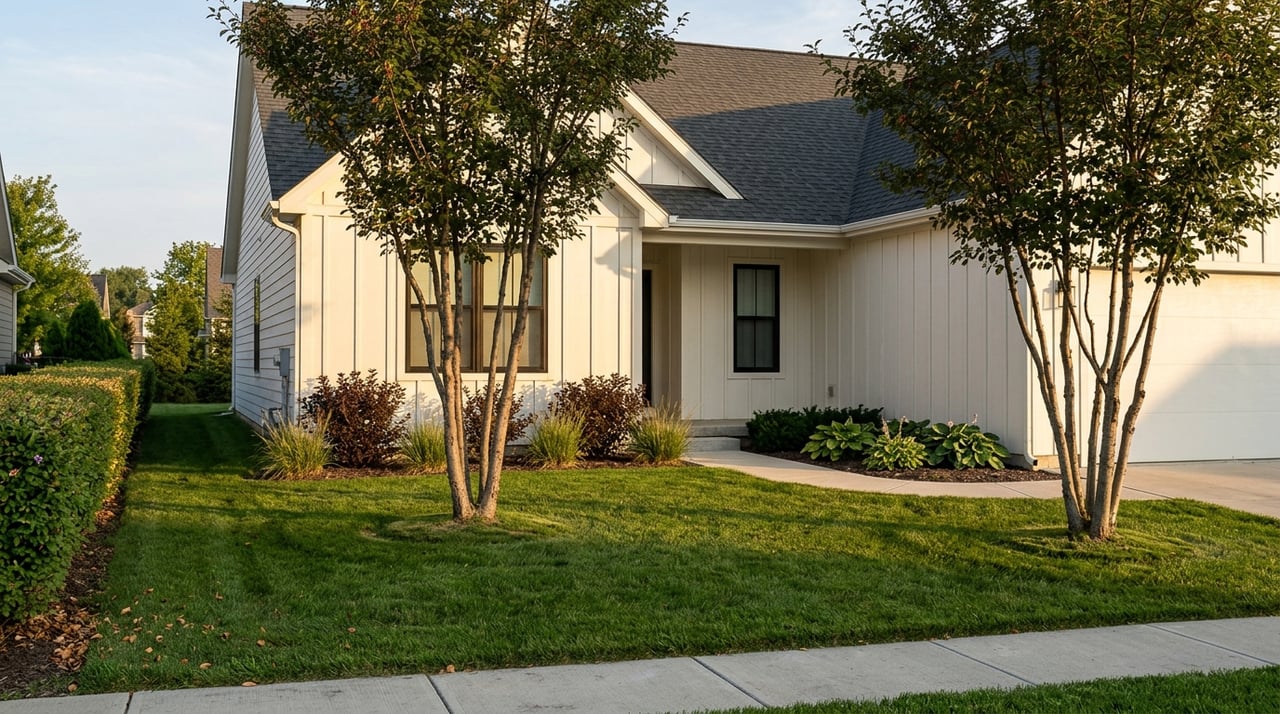
What you can buy ranges from turn-key spec homes ready for immediate occupancy to fully custom build-to-suit on your own lot. Architecturally, the market leans hard into modern farmhouse exteriors, open-concept two-stories, and updated split-level plans. One thing to build into your budget from the very beginning: special assessments. These are a standard North Dakota mechanism for funding city infrastructure — streets, water mains, storm sewer — and in new subdivisions they can meaningfully change your monthly payment. A builder's quoted price is not your total cost of ownership.
Horace is an appreciation market, not a cash-flow market. Investors who come in expecting high cap rates or quick flips generally leave disappointed. Investors who come in with a long horizon tend to do well.
Rental strategy. With entry prices starting near $300,000, traditional long-term single-family rentals produce modest cap rates. What Horace does offer is unusually reliable tenant demand — much of it from families who want West Fargo school access while they wait to build or buy. The stronger play at the top of the market is build-to-rent single-family and twin-homes, which command strong monthly rents from corporate transferees and established professionals who want a house rather than an apartment.
Appreciation. This is the real case for Horace. Sustained suburban expansion, ongoing infrastructure investment, and consistent regional demand have supported solid value retention and growth. Properties here hold up.
Fix-and-flip. Largely off the table. When the majority of the housing stock was built in the last two decades, distressed or dated inventory barely exists. The rare flip opportunities come from estate sales or older homes in original Horace east of the river — and those get competitive fast because there are so few of them.
The buying climate in Horace is steady and predictable, which is genuinely nice for buyers who've been through the wringer in tighter markets.
Two different games are being played simultaneously, and you should know which one you're in. Turn-key, well-priced resale homes move quickly during the spring and summer peak — that's a conventional competitive process. New construction is a different exercise entirely: you're negotiating specs, finishes, timelines, and allowances rather than fighting a bidding war.
Offers here typically include standard financing, inspection, and appraisal contingencies. One local wrinkle worth knowing: in winter months, buyers frequently negotiate weather-related repair escrows on new builds, covering uncompleted landscaping, sod, driveways, or exterior concrete that can't be finished until spring.
The single most important thing to look beyond on any Horace listing is the list price. Always pull the remaining certified special assessment balance. A $425,000 home in an older phase with paid-off specials can carry a lower monthly payment than a $395,000 home in a newer subdivision with a large remaining balance. Two homes with identical asking prices can differ by hundreds of dollars a month in what you actually pay.
On property types, modern multi-levels — bi-levels and modified two-stories — dominate the mid-tier. Expansive ramblers and custom executive homes cluster on river-adjacent parcels and in the higher-end subdivisions.
Selling in Horace means competing against something most sellers don't face: a brand-new house down the street with a model home, a design center, and no wear on anything.
Pace. Correctly priced existing resales generally find buyers in 30 to 45 days. The townwide median of 70 to 80 days reflects lingering new-construction listings, not the reality of a well-marketed resale.
Presentation. This is where Horace sellers win or lose. Your buyers toured a pristine builder model this morning. Yours needs to hold up against that memory. That means genuine staging, an immaculate deep clean, neutral finishes, high-quality photography, professional lighting, and aerial drone footage to communicate lot size and backyard space — which is often the thing a resale has that a new build on a small infill lot doesn't.
Seasonality. The window matters more here than people expect. Activity peaks from late spring through early autumn, driven by families trying to complete a move before the school year starts. Winter listings slow considerably and require disciplined snow management, clear access, and messaging around heating efficiency to stay in the conversation.
Pricing in Horace comes down to three local realities.
Price with specials in mind. Two identical floor plans in Horace can have very different effective costs to a buyer depending on remaining special assessment balances. If your specials are low or paid off, that's a real, quantifiable advantage — and it justifies a higher list price than the neighbor with a large remaining balance. Make sure it's disclosed and marketed, not buried.
Respect the new-build threshold. Price slightly below what a comparable new construction home would cost. If a buyer can build fresh down the street for $450,000, your existing home at $440,000 will stall unless it carries what new builds don't come with: finished basement, mature landscaping, composite deck, window treatments, fencing, appliances. Those upgrades are your leverage — but they need to be priced as a value story, not simply added on top.
Use micro-comps, not regional averages. Broad Fargo-Moorhead or even townwide Horace numbers will mislead you. Compare within your specific subdivision — Southdale Farms comps do not price a Lost River home. And pay attention to search thresholds: listing at $399,900 instead of $405,000 puts you in front of every pre-approved buyer filtering in $50,000 brackets, which is most of them.
If you're moving to Horace from outside the region, here's the orientation that matters.
Schools. You're in the West Fargo Public School District, with campuses located directly in town — Horace Elementary, Heritage Middle School, and Horace High School. For many relocating families, this is the whole reason Horace is on the list.
Climate. The Red River Valley has dramatic seasons and you should plan for both ends. Winters are cold and snowy, and a reliable all-wheel-drive vehicle is not a luxury here. Summers are warm and genuinely pleasant, organized around river recreation, youth sports, and neighborhood gatherings that spill into backyards.
Amenities. Horace itself is intentionally quiet. Major retail, grocery, and medical sit minutes away across the South Fargo and West Fargo borders. That said, the local commercial footprint is expanding — cafes, fitness, and neighborhood services continue to open as the population grows.
Taxes. Budget for special assessments. If you're coming from a state without this mechanism, it will surprise you. These are municipal infrastructure bonds attached to your property tax bill that fund the roads, water, and sewer in your subdivision, and they're a normal part of buying in newer North Dakota developments.
Horace is built for driving. The layout prioritizes fast arterial access to the broader metro over local density or transit.
County Road 17 (Sheyenne Street) is the primary north-south corridor, running straight to I-94 and West Fargo. Interstate 29 is a short trip east via 76th Avenue South or 100th Avenue South.
Typical drive times from Horace:
Destination | Drive Time |
|---|---|
Sanford Medical Center (I-94 campus) | 10–12 min |
Downtown Fargo | 15–20 min |
Hector International Airport (FAR) | 20–25 min |
Transit. MATBUS does not operate fixed routes into Horace. Daily life requires a personal vehicle. Uber and Lyft do serve the area.
Walking and biking. Errands require a car, but recreational infrastructure is strong and improving. Newer developments include an expanding network of paved multi-use trails along the Sheyenne and around school zones — good for running, walking, and casual cycling, less so for commuting.
Parking. A non-issue. Multi-car garages, wide driveways, and free surface parking everywhere — parks, schools, and commercial lots alike.
Horace is served by West Fargo Public Schools, one of the top-performing and fastest-growing districts in North Dakota. What sets Horace apart from other West Fargo district communities is that the full K–12 pipeline sits inside town limits — kids can go from kindergarten through graduation without leaving Horace.
Horace Elementary School (K–5) anchors central Horace, with low student-teacher ratios and heavy community involvement.
Heritage Middle School (6–8) is a modern campus with updated technology, full athletics, and strong music and fine arts programming.
Horace High School (9–12) opened to serve the area's growth and holds a 9/10 GreatSchools rating, with strong college-readiness benchmarks and top state rankings in science proficiency alongside modern athletic facilities.
For families seeking private or faith-based education, Horace is within a fifteen-minute drive of South Fargo's major private campuses, including the Saint John Paul II Catholic Schools system (Shanley High School) and Oak Grove Lutheran School.
The Horace Park District runs a park system built squarely around families and organized youth sports, and it punches above the town's size.
Meadowlark Park is the centerpiece — playgrounds, basketball and pickleball courts, a softball field, picnic gazebos, and a lighted outdoor ice rink with a warming house through the winter. Freed Park and Lions Park handle the athletic load with updated baseball diamonds, batting cages, open turf, and rentable shelters.
The Sheyenne River Water Trail runs directly through town, with local access points for kayaking, canoeing, and shore fishing. And in the newer master-planned subdivisions, paved multi-use trails connect residential streets directly to schools, parks, and the river corridor — a real quality-of-life factor if you have kids who bike.
Be clear-eyed about this one: Horace is a community-vibe town, not an entertainment district. The local scene runs on casual gathering spots where you run into neighbors after work or a youth game.
Local anchors include Big Erv's Bar & Grill, The Horace Headquarters, and the Sheyenne Bar — hearty American food, cold taps, weekend sports on the TVs. That's the honest scope of it, and for most Horace residents that's the point.
For date nights, steakhouses, cocktail lounges, or international cuisine, residents make the easy ten-to-fifteen-minute drive into South Fargo or downtown. Socially, Horace runs on block parties, Friday night high school games, and summer backyard gatherings rather than late-night options. If you want a nightlife-forward address, look at downtown Fargo. If you want a town where your neighbors show up to the same rink, Horace delivers.
This section matters more in Horace than almost anywhere else in the metro, because there are two components and most listings only make one of them obvious.
Base property tax. Cass County property taxes generally run around 1.3% to 1.5% of assessed market value, funding public schools, county services, and city operations.
Special assessments — the variable that changes everything. North Dakota municipalities use special assessments to finance local infrastructure: streets, water mains, storm sewer. In Horace's newer subdivisions, remaining balances can add several hundred dollars per month to a homeowner's escrow payment. This is not a rounding error, and it's the single most common thing out-of-state buyers get blindsided by.
What to do about it. Before you make an offer, request the official property tax card and the remaining certified special assessment balance. Then compare total monthly cost, not list price. A $425,000 home in an older phase with low or paid-off specials can cost less per month than a $395,000 home carrying heavy remaining infrastructure obligations. This one piece of homework can reorder your entire shortlist.
Is Horace a good place to live?
For families, working professionals, and move-up buyers, yes — and the reasons are specific. Horace offers larger lots and newer housing stock than comparable South Fargo neighborhoods, a full K–12 West Fargo Public Schools pipeline inside town limits, and a ten-to-twenty-minute drive to the metro's major employers. The trade-off is that it's a car-dependent community with limited dining and no transit service. If walkability or nightlife rank high on your list, Horace won't be the right fit.
How far is Horace from Fargo?
Roughly fifteen minutes to downtown Fargo, or ten to twelve minutes to Sanford's I-94 campus. County Road 17 (Sheyenne Street) runs north directly to I-94 and West Fargo, and I-29 is a short trip east via 76th Avenue South or 100th Avenue South.
What is the average home price in Horace, ND?
The median home value sits in the $405,000 to $415,000 range. Townhomes and entry-level single-family homes start in the low-to-mid $300,000s, the core move-up market runs $350,000 to $500,000, and executive and custom estates reach $600,000 to well over $1,000,000.
Why is Horace more expensive than other Fargo-area suburbs?
Because of what's actually being sold. Horace's housing stock is disproportionately new construction on generous lots, and newer homes on bigger parcels don't generate low comps. There simply isn't much older, smaller, or dated inventory to pull the median down — most of what exists sits in "original Horace" east of the Sheyenne River.
What school district is Horace in?
West Fargo Public Schools. Horace Elementary (K–5), Heritage Middle School (6–8), and Horace High School (9–12) are all located within town limits, so students can complete K–12 without leaving Horace. Horace High School holds a 9/10 GreatSchools rating with strong college-readiness benchmarks and top state rankings in science proficiency.
What are special assessments, and why do they matter so much in Horace?
Special assessments are a North Dakota mechanism for financing local infrastructure — streets, water mains, storm sewer — through bonds attached to your property tax bill. In Horace's newer subdivisions, remaining balances can add several hundred dollars per month to your escrow payment. This is the single most common cost surprise for out-of-state buyers. Always request the remaining certified assessment balance before making an offer.
Are property taxes high in Horace?
Base property taxes in Cass County generally run about 1.3% to 1.5% of assessed market value, which is in line with the region. Special assessments are what create real variation between homes. A $425,000 home in an older phase with paid-off specials can carry a lower monthly payment than a $395,000 home with a large remaining balance — so compare total monthly cost, not list price.
How long do homes take to sell in Horace?
Correctly priced existing resales typically find buyers in 30 to 45 days. The townwide average of 70 to 75 days is inflated by dirt-lot new-construction listings that accumulate market time while the home is being built, so don't read that number as a signal about resale demand.
Is it better to buy new construction or an existing home in Horace?
It depends on what you're willing to pay for and wait for. New construction gets you a current floor plan and no deferred maintenance, but you'll wait on the build, negotiate specs and allowances, and often inherit higher special assessments. An existing home usually comes with finished basements, mature landscaping, fencing, decks, and window treatments already in place — items that cost real money to add to a new build. Price the two on total cost of ownership, not sticker price.
Which builders and subdivisions are active in Horace?
Regional builders working the area include Dabbert Custom Homes, Thomsen Homes, Heritage Homes, Brookstone Property, and Designer Homes. Southdale Farms holds the more accessible entry points and volume builds; Cub Creek and Rivers Edge cover the mid-to-upper-tier custom range; Lost River is executive custom estate territory.
Is Horace a good market for real estate investors?
For long-term appreciation, yes. For cash flow, it's harder. With entry prices near $300,000, traditional long-term rentals produce modest cap rates, though tenant demand is reliable — much of it from families wanting West Fargo school access while they wait to build. Build-to-rent single-family homes and twin-homes at the upper end capture strong rents from corporate transferees. Fix-and-flip opportunity is minimal, since the housing stock is too new to produce distressed inventory.
Does Horace flood?
Flood risk was the defining constraint on Horace's growth for most of its history, and it's the reason the town stayed rural for so long. The Sheyenne Diversion Project, completed in the early 1990s, substantially mitigated seasonal flood risk and directly enabled the suburban expansion you see today. Flood zone designations still vary by parcel, particularly near the river, so verify status on any specific property.
Is there public transportation in Horace?
No. MATBUS does not run fixed routes into Horace, so daily life requires a personal vehicle. Uber and Lyft operate in the area. Given Red River Valley winters, an all-wheel-drive vehicle is a practical necessity rather than a preference.
What is there to do in Horace?
The Horace Park District runs a strong system for a town this size — Meadowlark Park with playgrounds, pickleball and basketball courts, and a lighted winter ice rink with warming house; Freed and Lions Parks for baseball and open turf; and Sheyenne River Water Trail access for kayaking, canoeing, and shore fishing. Newer subdivisions connect to paved multi-use trails. Dining is casual and local — Big Erv's Bar & Grill, The Horace Headquarters, and the Sheyenne Bar — with South Fargo and downtown ten to fifteen minutes away for anything more.
Horace rewards local knowledge more than most markets in the region. Knowing which subdivision a comp came from, which builder is active in which price tier, and what's actually left on a home's special assessments is the difference between a clean transaction and an expensive surprise.
Up North Realty Group works throughout Horace and the greater Fargo-Moorhead area, along with Grand Forks, Moorhead, Detroit Lakes, and the Lakes Region. If you're buying, we'll help you compare new construction against resale on a true total-cost basis and pull the tax and assessment records that don't show up in a listing. If you're selling, we'll build a pricing strategy around your specific subdivision's comps and the new-build competition you're actually up against — and market your home to hold its own against a builder's model.
Whether you're relocating from out of state, moving up from South Fargo, or just starting to explore what Horace offers, we're happy to be a resource. Reach out through the contact form, request a home valuation to see where your property stands in today's market, or browse current listings to get a feel for what's available. No pressure, no pitch — just straight answers about a market we know well.
There's plenty to do around Horace, including shopping, dining, nightlife, parks, and more. Data provided by Walk Score and Yelp.
Explore popular things to do in the area, including SunGold Foods, Big Erv's Bar and Grill, and Casey's.
| Name | Category | Distance | Reviews |
Ratings by
Yelp
|
|---|---|---|---|---|
| Dining | 1.91 miles | 0 reviews | 0/5 stars | |
| Dining · $$ | 3.04 miles | 36 reviews | 3.2/5 stars | |
| Dining | 3.39 miles | 2 reviews | 3/5 stars | |
| Dining | 3.6 miles | 3 reviews | 3.7/5 stars | |
| Dining | 3.82 miles | 0 reviews | 0/5 stars | |
| Dining | 3.85 miles | 0 reviews | 0/5 stars | |
| Dining | 3.89 miles | 1 review | 5/5 stars | |
| Dining | 4.1 miles | 1 review | 2/5 stars | |
| Dining · $ | 4.29 miles | 16 reviews | 3.6/5 stars | |
| Active | 2.1 miles | 0 reviews | 0/5 stars | |
| Active | 2.35 miles | 0 reviews | 0/5 stars | |
| Nightlife | 4.6 miles | 8 reviews | 3.9/5 stars | |
| Nightlife | 4.94 miles | 0 reviews | 0/5 stars | |
| Beauty | 2.95 miles | 0 reviews | 0/5 stars | |
| Beauty | 3.03 miles | 0 reviews | 0/5 stars | |
| Beauty | 3.03 miles | 0 reviews | 0/5 stars | |
| Beauty | 3.58 miles | 5 reviews | 3.2/5 stars | |
| Beauty | 3.59 miles | 1 review | 3/5 stars | |
| Beauty | 4.64 miles | 2 reviews | 3/5 stars | |
|
|
||||
|
|
||||
|
|
||||
|
|
||||
|
|
||||
|
|
Horace has 1,737 households, with an average household size of 2.96. Data provided by the U.S. Census Bureau. Here’s what the people living in Horace do for work — and how long it takes them to get there. Data provided by the U.S. Census Bureau. 5,136 people call Horace home. The population density is 73 and the largest age group is Data provided by the U.S. Census Bureau.
Total Population
Population Density Population Density This is the number of people per square mile in a neighborhood.
Median Age
Men vs Women
Population by Age Group
0-9 Years
10-17 Years
18-24 Years
25-64 Years
65-74 Years
75+ Years
Education Level
Total Households
Average Household Size
Average individual Income
Households with Children
With Children:
Without Children:
Marital Status
Blue vs White Collar Workers
Blue Collar:
White Collar: